2026-08-01
What Overseas Buyers Scan in the First 10 Seconds on a Solar Panel Factory Site
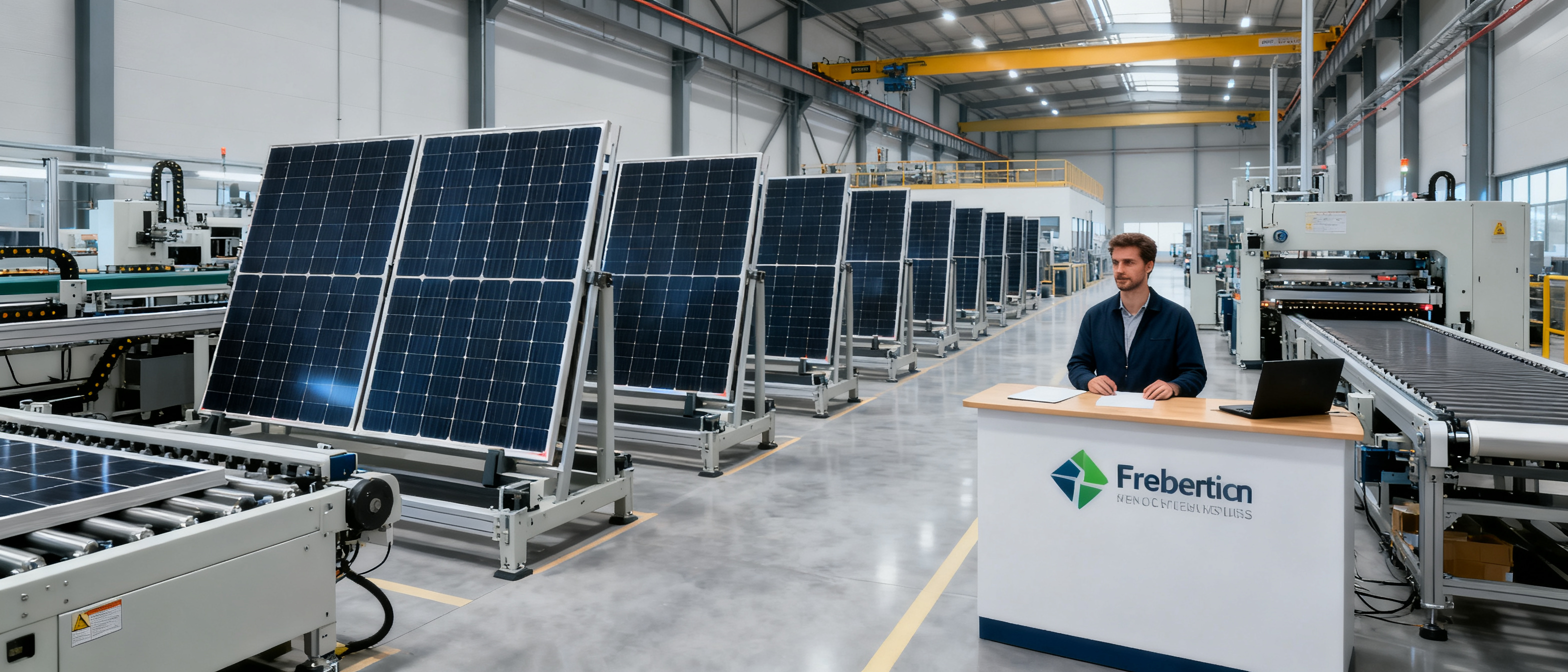
The First 10 Seconds: What Overseas Buyers Need to See on a Solar Panel Factory Site
Overseas buyers do not read factory websites the way a local distributor might. They scan. Within the first ten seconds of landing on a solar panel factory site, an experienced procurement manager from Germany, Japan, or the United States has already formed a provisional judgment about whether your operation is legitimate, traceable, and worth the risk of a cross-border inquiry. That judgment is rarely revisited. The elements that matter in that narrow window are strikingly consistent across industries: they want visual proof of a real factory floor, they want to see recognized certifications without scrolling, and they want a direct path to a human being who can answer technical questions. Anything that obscures those signals—slow loading, generic stock photography, buried contact details—works against you. A clean, fast showcase site like the one at https://demo.getb2bsite.com/solar demonstrates how these priorities can be organized on a single page that respects the buyer's time and attention span.
What buyers actually scan for in those first seconds can be reduced to a short list:
- Factory reality indicators: Real equipment, real production lines, real workers. Not renderings. Not stock images of a generic industrial building.
- Certification badges or references: TÜV, CE, ISO 9001, IEC 61215, or equivalent marks that signal third-party audit history.
- Geographic and contact clarity: A physical address, a direct phone number or WhatsApp link, and an email that does not route through a generic info@ alias that no one monitors.
- Production capacity basics: Annual output in megawatts, panel types and wattage ranges, and minimum order quantities—all visible without downloading a PDF.
- Navigation simplicity: One page that scrolls. No nested menus, no splash screens, no auto-playing video that consumes bandwidth on a mobile connection in Lagos or Jakarta.
When a buyer encounters a site that delivers these signals immediately, the psychological barrier to making contact drops significantly. When they do not, the tab closes and the next supplier on the search results page gets the opportunity instead.
Load Time: The Silent Trust Killer for Solar Panel Factory Websites
No visual design decision matters if the page never finishes loading. Google's own research, documented extensively on https://web.dev/vitals/, has shown that as page load time increases from one second to three seconds, the probability of a visitor bouncing rises sharply—and for mobile users on slower networks, the effect is amplified. Overseas buyers evaluating solar panel suppliers are frequently working from offices in different time zones, on corporate VPNs, or on mobile devices while traveling. A factory site that loads in under two seconds communicates operational competence. One that takes six seconds to render a hero image communicates the opposite.
The relationship between load time and buyer trust is not anecdotal. Research across e-commerce and B2B procurement consistently shows that speed is interpreted as a proxy for reliability. The table below summarizes the behavioral impact observed across publicly available performance studies:
| Page Load Time | Observed Bounce Rate Increase | Buyer Perception |
|---|---|---|
| Under 1 second | Baseline (lowest) | Professional, well-maintained operation |
| 1–3 seconds | ~32% increase | Acceptable but unremarkable |
| 3–5 seconds | ~90% increase | Outdated or under-resourced |
| Over 6 seconds | ~106%+ increase | Potentially abandoned or fraudulent |
Thin English showcase sites built on lightweight frameworks avoid the bloat that causes these delays. There is no heavy CMS database, no unoptimized JavaScript bundle from a page builder, and no third-party tracking script loading before the visible content. The result is a page that renders fast on any device, anywhere in the world. For a factory that wants to be taken seriously by international buyers, that speed is not a luxury—it is a functional requirement.
Trust Signals Buyers Demand: Certifications, Factory Floor Proof, and Quick Contact
After speed, the next thing a buyer's eyes hunt for is evidence that the factory is real and audited. This is where most thin factory sites fail. They either bury certifications in a downloadable PDF that no one opens, or they display low-resolution logos that look copied from another website. The most effective trust signals are immediate, visible, and verifiable. A buyer should be able to see—without scrolling past the first screen—that the factory holds relevant certifications, that real production is happening, and that someone is reachable right now.
The table below categorizes the trust signals that matter most to overseas solar panel buyers and what each signal communicates:
| Trust Signal Type | Examples | What It Communicates to the Buyer |
|---|---|---|
| Third-party certifications | TÜV Rheinland, CE marking, ISO 9001, IEC 61215/61730 | Product safety, quality management systems, and compliance with international standards |
| Factory floor photography | Real production line images, testing equipment, warehouse with visible inventory | Operational capacity, genuine manufacturing rather than reselling |
| Visible contact pathways | WhatsApp button, direct email, phone with country code | Accessibility, willingness to engage directly with foreign buyers |
| Company documentation | Business license excerpts, export records, trade show participation | Longevity, export experience, and legitimacy in international trade |
A solar panel factory showcase built on the B2B Frontage model—such as the demo at https://demo.getb2bsite.com/solar—organizes these trust signals so that they appear in the natural scanning path of the buyer. Certifications are placed near the top, factory images are genuine and labeled, and contact options are never more than a single tap away. The B2B Frontage rules emphasize that every element on the page should serve a buyer's decision-making process, not decorate the page for an internal stakeholder's approval.
The One-Click Inquiry: Eliminating Friction on Your Solar Panel Demo Site
The final test of a factory site is whether a buyer can initiate contact in one action. Every additional click, every form field that asks for redundant information, and every CAPTCHA that fails on a slow connection reduces the probability that an inquiry will be completed. The most effective inquiry design for a solar panel factory site is not a multi-field contact form buried on a separate page. It is a visible, always-accessible button—often a WhatsApp or email link—that sits in a fixed position or appears immediately after the trust signals have done their work.
The https://demo.getb2bsite.com showcase illustrates this principle. The inquiry pathway is not hidden in a navigation menu. It is present on the page as a direct call to action. This approach recognizes that overseas buyers are often making decisions from a smartphone, between meetings, and in a language that may not be their first. Reducing the inquiry to a single tap or click respects that context. For factories using the B2B Frontage Auto plan at $59 per year, the self-serve English showcase includes a digital card, brochure, and short links on a subdomain, with optional domain binding available at checkout for an additional $5 or full registration and binding for $15. Larger CMS or custom factory sites are available by quote only, but for most factories seeking to establish a credible English-language presence, the Auto plan covers the fundamentals without unnecessary complexity or cost.
Friction points that kill inquiries on factory sites include:
- Multi-step contact forms that ask for company name, tax ID, and annual procurement volume before a message can be sent.
- Email addresses that are not clickable on mobile, forcing the buyer to copy, switch apps, and paste.
- Chat widgets that require sign-up or load slowly from a third-party server, blocking the page in the process.
- Phone numbers without country codes or WhatsApp integration, assuming the buyer will dial an international number manually.
Removing these obstacles is not expensive. It requires a deliberate focus on the buyer's experience rather than the factory's internal preferences. The sites that win inquiries are the ones that make the act of reaching out feel effortless.
FAQ
How quickly should a solar panel factory site load for overseas buyers?
Ideally under two seconds on a standard mobile connection. Research published on web.dev shows that bounce rates increase sharply once load times exceed three seconds. Overseas buyers often browse on slower networks or while traveling, so a lightweight site without heavy scripts or uncompressed images is essential. A thin English showcase built on a static or minimal framework can achieve sub-second load times consistently.
What certifications do overseas buyers look for on a solar panel factory website?
The most commonly recognized certifications include TÜV Rheinland or TÜV SÜD for product safety, CE marking for European market access, ISO 9001 for quality management systems, and IEC 61215/IEC 61730 for photovoltaic module performance and safety. Buyers also look for evidence of export history, such as trade show participation or references to past shipments. These should be visible on the page as badges or clearly labeled references, not hidden in a downloadable file.
Do I need factory floor photos on my showcase site, or are product images enough?
Factory floor photos are essential. Overseas buyers use them to verify that the factory is a real manufacturing operation rather than a trading company or reseller. Product images alone do not provide that assurance. Images should show actual production lines, testing equipment, and—where possible—workers in the facility. Stock photography or heavily edited images can undermine trust rather than build it.
What is the best way to add a contact option to a solar panel factory site?
The most effective approach is to include a visible, one-click contact option—typically a WhatsApp link or a direct email—that is accessible from the moment the page loads. Avoid multi-field forms that require the buyer to fill out extensive information before submitting an inquiry. A fixed-position button or a prominent link near the trust signals section works well. The goal is to make the inquiry action feel immediate and low-effort.