2026-10-28
What Should a Manufacturing Website Say About Your Business?
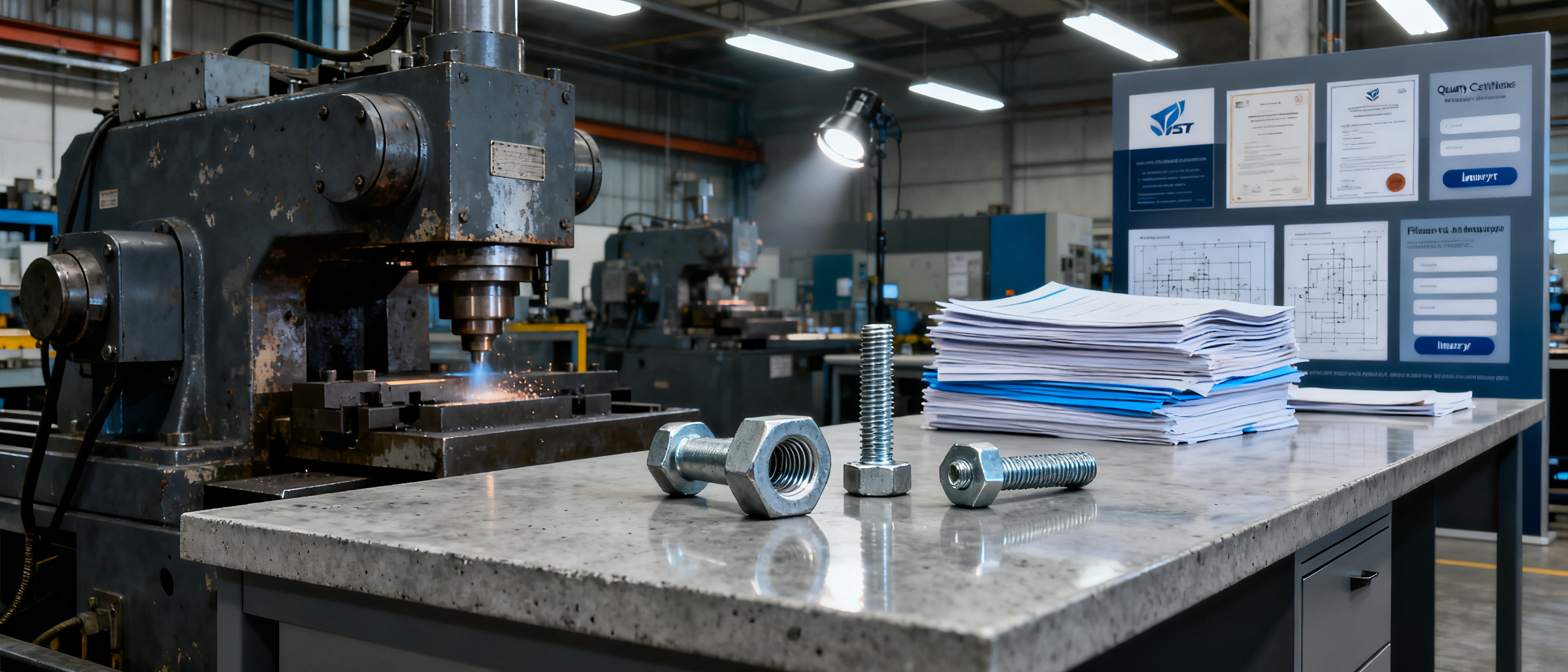
When a buyer lands on your site, they are silently asking “what should a manufacturing website say about your business?” The short answer: it must instantly communicate who you are, what you make, why they can trust you, and how to start a conversation—without industry fluff. A procurement manager scans in under 10 seconds; if they can’t find real company facts, visible quality proof, and a clear path to an inquiry, they move on. Below, a practical framework that helps both export factories and small-B manufacturers get RFQs instead of bounces.
Essential Company Information That Builds Instant Trust
A manufacturer’s website is first a credential, not a brochure. Above the fold—before any product gallery—a visitor needs to confirm they’ve landed on a real, reachable business. This is where most factory sites lose buyers: they lead with generic production capacity slogans but hide the basics.
The information that builds instant trust includes:
- Legal company name and the city and country of the main factory or office.
- Operating years or a founding date—simply “since 2008” does more than “experienced.”
- Team size (employees on the floor, not full admin) and facility square footage when relevant.
- Core capability statement in one sentence: e.g., “We precision-machine aluminum enclosures with in-house powder coating.”
- Real contact face—a photo of the export manager or shopfloor supervisor with their name, and a direct email or WhatsApp link.
When a hardware buyer scans for the first time, they are verifying if you’re a genuine factory, a trading office, or an agent. Google’s helpful content system also rewards sites that demonstrate clear business credentials and real-world expertise (Google Search Central). A tiny headshot and a local phone number can increase the perceived trustworthiness of a page more than a whole wall of text.
Product & Process Details Buyers Scroll For
After passing the trust check, industrial buyers want to know exactly what you make and how you make it. Generic phrases like “custom parts” or “high-quality manufacturing” answer nothing. Instead, fill this information gap with process details that a technical buyer or purchasing engineer will look for.
For an OEM hardware manufacturer, the product section should open with clear product categories and thread them with real production context:
- Primary product types with real, unretouched photos—preferably tagged by material and max dimensions.
- Common raw materials and grades you stock or process (6061-T6 aluminum, 304 stainless, PA6-GF30, etc.).
- In-house equipment list—buyers scan for specific CNC model numbers (Haas VF-2, Sodick wire EDM) or line types (extrusion press tonnage).
- MOQ and typical lead time per product family, not “as per inquiry.” Even a range helps pre-qualify.
- Packaging and export readiness—pallet config, air/sea freight capability, and on-site loading photos if available.
This matters because overseas sourcing desks rarely fill out long RFQ forms for a factory that shows only stock photos. A clear mapping of buyer questions to the content you post can look like this:
| Buyer’s Question | Content to Show |
|---|---|
| Can you handle this material and finish? | Material grades and surface treatment capabilities, with part photos. |
| What is your typical batch size? | Minimum order quantity and average order value per line. |
| How soon can I get a sample? | Sample policy, lead time, and courier used (DHL/FedEx). |
| Do you have experience with my industry? | Short case snapshots: part type, quantity delivered, country. |
For example, a CNC turning workshop in Pune that quietly lists “DMG MORI NLX 2500” on its capabilities page answers the precision question before the buyer asks. That one detail is worth a dozen brochure adjectives.
Quality Proofs and Certifications That Close the RFQ Gap
When a B2B buyer compares two similar suppliers, the one that shows verifiable quality proof almost always gets the first inquiry. Yet many manufacturers simply paste an ISO 9001 logo and move on. The core question every serious procurement person asks is “will my parts arrive to spec, and can you prove it?”
Answer that by displaying these quality artifacts directly on your site:
- Certification images with traceable numbers—a clear photo of the certificate, not just a generic badge. Buyers often cross-check cert numbers with accrediting bodies.
- Inspection equipment list—CMM brand, spectrometer model, hardness testers, and the inspection frequency per batch.
- Real defect-rate data if available—e.g., “≤0.5% defect rate over 200,000 units delivered in 2023” establishes credibility.
- On-site QC station photos or a short quality-control flow—a diagram showing incoming material check, in-process inspection, and final audit.
- Audit history—if you’ve passed a buyer’s factory audit (SGS, Bureau Veritas), mention the standard and year.
An aluminum extrusion factory that uploads spectrographic test reports for each alloy batch answers the metallurgy concerns of a European importer better than any “high quality” claim. In an industry where a single material mix-up can scrap a container of parts, documented quality control isn’t marketing—it’s risk reduction for the buyer.
From Scanning to Sending: A Clear Inquiry Path
Even when the trust signals and product details are perfect, a manufacturing website loses RFQs if the inquiry path is unclear or too heavy. A buyer who has just decided you’re worth contacting should be able to take the next step without hunting for a form or WhatsApp icon.
The inquiry path should be obvious in two places: a sticky “Request Quote” button that follows the scroll, and a dedicated contact section near the product details with a short, smart form (name, email, one-line message, attachment field). Keep the number of required fields to three or fewer—every extra field loses a percentage of potential inquiries.
- Include a direct WhatsApp or WeChat link (for many export desks, a quick “Hi, can you quote?” message is the new RFQ).
- Show a personal email address of the sales engineer, not just info@—it humanizes the factory.
- If you use a live chat, configure it to show the sales team’s timezone and a typical reply window.
- Link to a LinkedIn profile of the export manager; it’s a lightweight trust check for Western buyers.
A manufacturer’s site that connects a buyer to a real person within 15 seconds of the “contact” click mirrors the experience of a good marketplace profile, but on your own domain. And while a fast site is never a content topic on its own, poor Core Web Vitals can make even the clearest inquiry button feel broken—check page load performance through resources like web.dev/vitals to avoid losing inquiries to a slow checkout.
FAQ
Should I include a factory tour video on my manufacturing website?
Yes, a 1–2 minute phone-shot walkthrough of the shopfloor works better than a polished corporate video. Show machinery under production, QC stations, and raw material storage—buyers use these to gauge actual scale and cleanliness. Host it on your own page (not just YouTube) and keep the file size small so it loads quickly.
How much technical detail should the homepage of a B2B manufacturing site carry?
The homepage should carry the summary of what you do, not the full spec library. Answer the buyer’s first five questions: who you are, what you make, which industries you serve, one headline quality proof, and how to reach you. Move deep tolerances, chemical compositions, and full machinery lists to dedicated product or capability pages—the scannable homepage gets you to the conversation.
Can a simple one-page website work for a factory, or do I need multiple pages?
A single, well-structured page can absolutely answer most of a scanning buyer’s questions if it includes all the trust elements described above. However, adding a separate “About” page and a few detailed product sub-pages can improve your credibility with serious sourcing managers and help with organic search visibility. The key is not page count but whether the critical information lives where a buyer expects it.
References & Further Reading
- B2B Frontage Blog – practical guides for low-maintenance manufacturer websites.
- Google Search Central – Helpful Content Update – how Google rewards people-first content and genuine business transparency.
- web.dev – Core Web Vitals – understand technical performance signals that affect user trust and search visibility.
- Thomasnet – What Industrial Buyers Want From Your Website – survey data on the information buyers look for first.
- Alibaba Seller Central – Build a Trustworthy Supplier Profile – tips from a B2B marketplace on presenting factory credibility (relevant even for own-domain sites).