2026-09-09
RFQ vs. RFI vs. RFP: What Exporters on Made-in-China Must Know
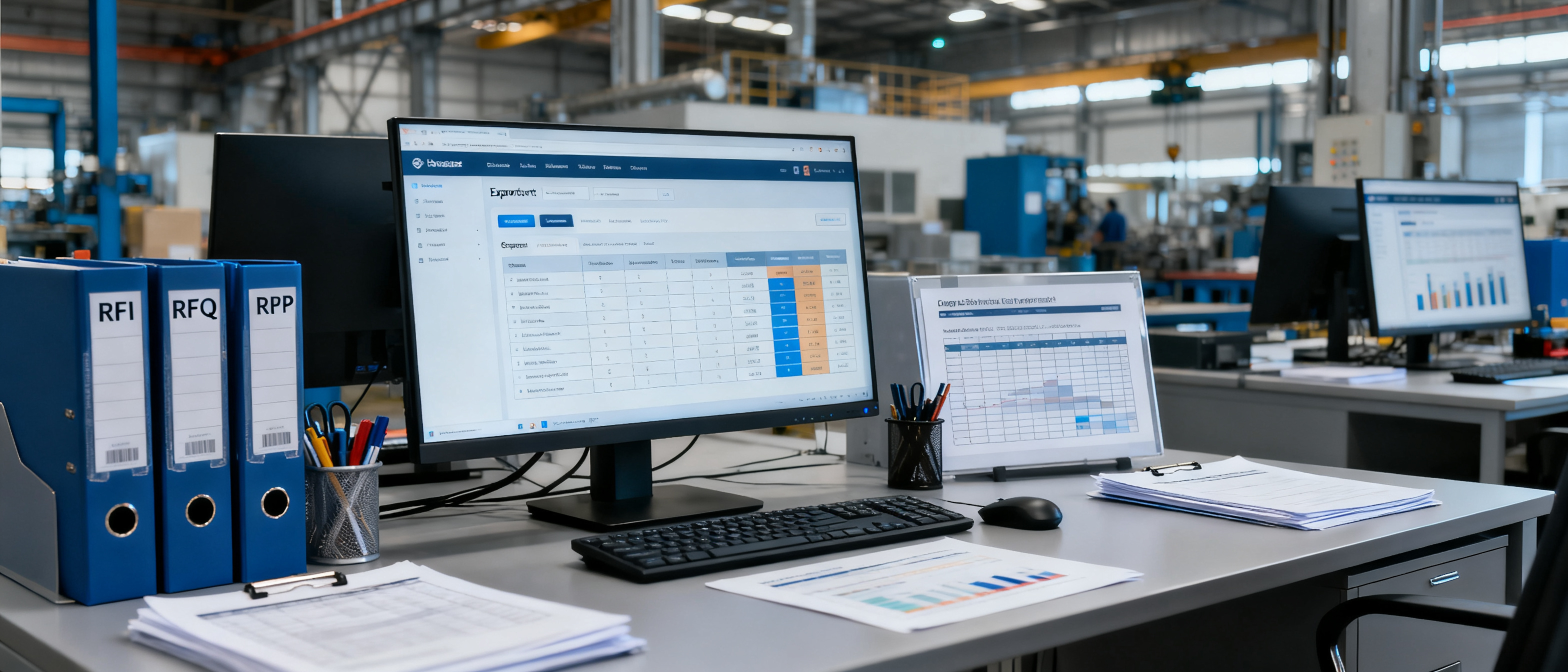
For manufacturers using Made-in-China, the difference between RFQ, RFI, and RFP determines whether a buyer gets a price list, a capabilities deck, or a full proposal. Mixing them up wastes time and can cost you the lead. An RFI (Request for Information) asks who you are; an RFQ (Request for Quotation) asks what it costs; an RFP (Request for Proposal) asks how you’d solve the problem. On Made-in-China, RFQs dominate, but RFIs often come first from buyers who are still shortlisting suppliers—and a well-organized own-domain website can be the asset that turns an RFI into a firm RFQ.
What RFI, RFQ, and RFP Actually Mean for a Manufacturer
Each term marks a different stage in the buyer’s buying process. For an export desk, misreading the signal replies with the wrong information and looks unprofessional.
- RFI (Request for Information) – A buyer is gathering general company and capability data. They want to know your production capacity, certifications, and export experience. This is not an order; it’s a filter. A factory that sends a price list at this stage risks looking pushy.
- RFQ (Request for Quotation) – The buyer has a clear specification, quantity, and delivery window. They expect a unit price, payment terms, and lead time. On Made-in-China, RFQs are usually pre-formatted with product details, so you can respond directly with a quote.
- RFP (Request for Proposal) – Less common in standard product sourcing, but appears when a buyer needs a custom solution, private labeling, or a complex project. The request asks for a documented plan: technical approach, timeline, quality assurance, and commercial terms. An RFP often expects a PDF or a link to a dedicated page on your own site.
For most Made-in-China suppliers, the core workflow is RFI → RFQ → negotiation. The RFP is reserved for larger OEM contracts or multi-year supply agreements.
How Made-in-China Buyers Use These Requests (and Which You’ll See Most)
Made-in-China’s platform structures buyer outreach around product listings and company profiles. Buyers can send a direct inquiry, use the site’s “Post RFQ” function, or browse supplier storefronts and request a quote. The platform labels most inquiries as “RFQ,” but the real intent often falls into the RFI category.
In practice, a buyer might send a message saying “I’m interested in your food dehydrator” without any quantity or target price. That’s an RFI, even if the system calls it an RFQ. A true RFQ arrives with a detailed spec sheet attached, a quantity range, and a delivery port. RFPs are rare on Made-in-China; they usually come through email after an initial connection, often from procurement agents representing overseas brands.
Suppliers who treat every inquiry as a price request often reply with a download of their catalog and a price list—and get ignored. A smarter approach is to read the message for clues: if there’s no spec, send a brief introduction and a link to your own website’s About or Capabilities page. That gives the buyer a professional, controlled view of your factory without overwhelming them.
Why a Supplier’s Own Website Matters After an RFQ on Made-in-China
Made-in-China is a discovery engine. An RFQ lands in your inbox because the buyer found your listing. But once the conversation moves to email or WhatsApp, the buyer will almost always search for your company name and check your own website. If they find a broken link, a ten-year-old template, or nothing at all, the trust built inside the marketplace evaporates.
An own-domain website acts as a permanent handshake. It confirms the company is real, shows recent production photos, and makes it easy for the buyer to forward your information to a colleague—something a marketplace profile rarely does well. Even a thin managed frontage, like B2B Frontage’s purpose-built manufacturer showcase, gives you a clean, mobile-friendly page that loads fast and focuses on the facts buyers need: company overview, core solutions, and certs. This beats sending a 20MB PDF that gets lost in an inbox.
From a technical standpoint, Google’s guidance on creating helpful, people-first content (SEO Starter Guide) emphasizes that a site should demonstrate expertise and trustworthiness. A simple, fast website with accurate contact details and a clear “About” page directly supports the EEAT signals that procurement teams and search engines look for. When you reply to an RFQ, including a short link to your own site—not just your Made-in-China storefront—shows the buyer you’re an established operation, not a middleman.
Quick Comparison: RFI vs. RFQ vs. RFP for Exporters
This table breaks down rfq vs. rfi vs. rfp by what the buyer knows, what they expect, and how a supplier should respond on Made-in-China.
| Request Type | Buyer’s Knowledge Level | Typical Made-in-China Trigger | Supplier’s Best Response |
|---|---|---|---|
| RFI | Low—exploring categories | General inquiry; no spec | Company intro + link to own capabilities page |
| RFQ | High—has spec, quantity, timeline | “Post RFQ” with detailed form | Exact price, MOQ, lead time, payment terms |
| RFP | Very high—needs custom solution | Rare; usually after prior contact | Structured proposal document or dedicated webpage |
Notice that the RFI response leans heavily on having a reliable own-domain presence. A marketplace profile can’t be curated to highlight the exact information a buyer is evaluating; a dedicated frontage can. That’s worth investing in even if you’re a small factory—maintaining a thin managed site costs less than a missed deal.
FAQ
What is the most common request type on Made-in-China?
Most incoming messages are RFIs, even if the platform labels them as RFQs. Buyers often send a first contact to check if you’re still active and exporting. Treat these as relationship starters, not immediate quotes.
Can I ignore an RFI if I already have a product catalog?
No. An RFI is a buyer’s first filter. If you ignore it, you’re removed from the shortlist. Reply within 24 hours with a short, professional note and a link to your own website where the buyer can see your production floor, certifications, and recent shipment photos—details that go beyond a catalog.
How quickly should I respond to an RFQ on Made-in-China?
Within 12 hours if possible, especially for time-sensitive RFQs from buyers in Western time zones. The first supplier to quote with a clear price and a link to a professional website often wins the conversation. A slow response signals that you’re not serious about export.
Does an RFP always require a written proposal?
Not always, but a structured answer is expected. For a smaller custom project, you can create a password-protected page on your own website that outlines the solution, timeline, and quality control steps. This is more professional than a long email and easier to update.