2026-09-22
Managed Website Services for Factories: When DIY Builders Fall Short
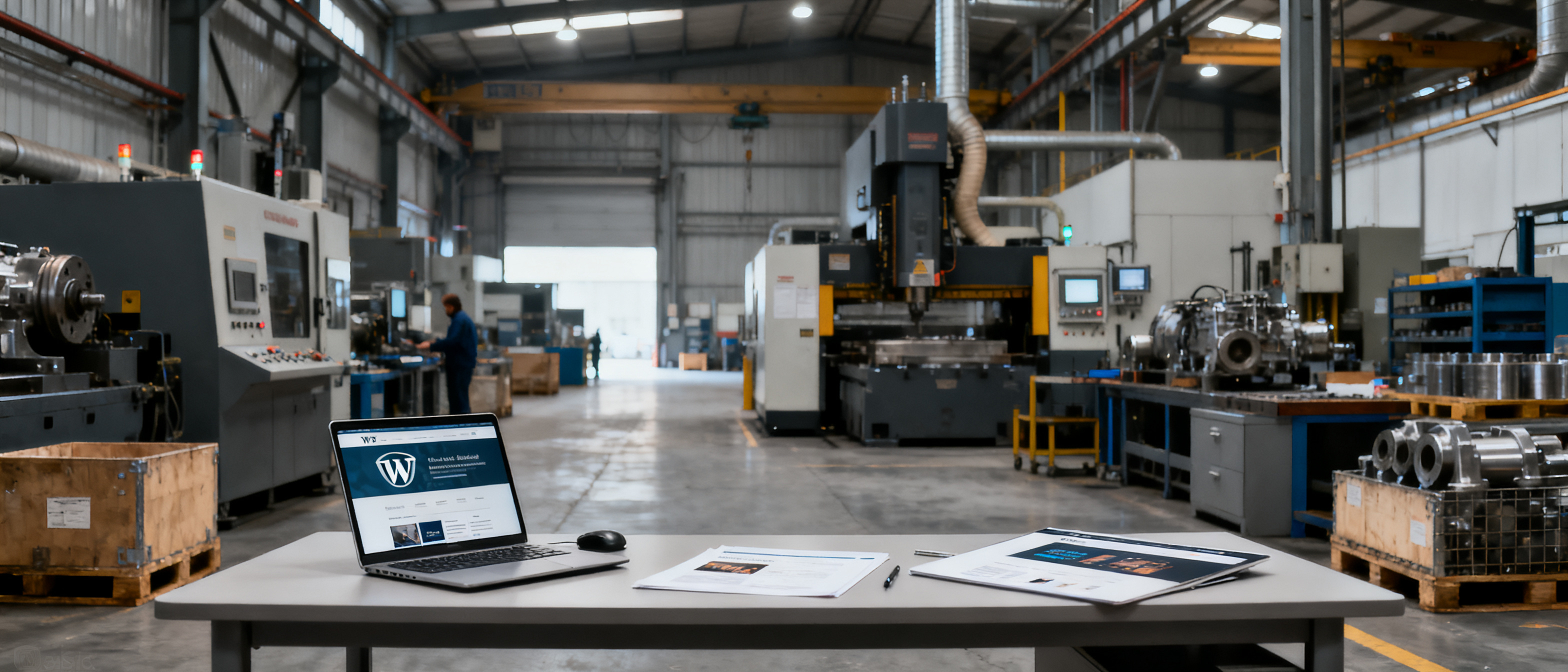
When an export factory or small OEM needs an English website, the first instinct is often to grab a DIY builder like WordPress or Wix. Those tools are powerful—but they hand you a blank canvas and expect you to maintain it. Managed website services flip that model: a supplier describes what they do once, and a service takes care of the rest, keeping the site live, secure, and up-to-date without the owner ever logging in to edit a page. For manufacturers who already run a production floor, that difference matters far more than how many templates a builder offers.
What a Managed Website Service Actually Does for Manufacturers
Unlike a self-build platform, a managed website services arrangement separates content ownership from operational chores. You supply the core facts—company name, products, certifications, contact details—and the service publishes and maintains a clean English frontage. That frontage isn’t a full CMS with a blog, multi-language system, or custom design freedom; it’s a deliberate scope: an always-on showcase that stays current without any internal IT effort.
Typical tasks that fall on the service side include:
- Hosting and SSL renewal
- Core Web Vitals monitoring, cache flushing, and uptime checks
- Security patches (for any underlying CMS, if one is used)
- Content updates when the manufacturer changes its product line or certifications
- Ensuring the site remains fast enough for overseas buyers who scan in seconds
In practice, this means an export desk manager doesn’t need to remember how to edit a page builder, renew a domain, or chase a web developer when the HTTPS certificate expires. The site simply stays online, aligned with the factory’s current reality, for a predictable annual fee. For many small manufacturers—Chinese OEMs, Indian component suppliers, Turkish textile exporters—this is a shift from treating the website as an IT project to treating it as a business asset that doesn’t demand their time.
WordPress and Wix Give You a Canvas — That’s Not Always a Gift
WordPress and Wix are full-strength website builders. You can create almost any layout, add e-commerce, spin up a blog, install SEO plugins, and integrate third-party tools. For a business that needs publishing velocity or custom design, that flexibility is an asset. For an OEM factory whose English presence mainly answers “who are they and can they do this?”, the same flexibility turns into maintenance debt.
A DIY WordPress site for a small manufacturer often follows a pattern: someone in the foreign-trade team builds it during a slow month, then it ages without updates. Plugins go stale, the theme falls behind, pages break after an auto-update. A Wix site is less prone to technical breakage, but the owner still needs to log in, edit content, and keep the layout coherent across device sizes. That’s overhead no production manager signed up for.
According to web.dev’s performance guidance, even a visually simple site can fail Core Web Vitals if images aren’t compressed and third-party scripts aren’t monitored (Web Vitals). A factory owner who last opened a website builder six months ago is unlikely to be checking LCP scores. In contrast, a managed website service treats ongoing performance as part of the package, so overseas buyers don’t bounce before the products load.
This isn’t a critique of builders—it’s about the gap between the tool’s capabilities and the amount of ongoing attention a factory can realistically give. A blank canvas is exactly right for a marketing team that publishes weekly; it’s often overkill for a thin English frontage that should just sit there and stay trustworthy.
An Agency Site Still Leaves You as the Maintainer
Hiring a web agency to build a custom site elevates design quality, and the result can perfectly mirror a brand. Yet once the agency delivers the project, the maintenance relationship typically resets. You own the code, the plugins, and the content. Even with a retainer, an agency’s time is billed, and small updates—adding a new product photo, adjusting a certificate—require a request cycle and often a minimum charge.
For factories that update their catalog seasonally or add certifications once a year, that model adds friction. The foreign-trade team either avoids making changes (leaving the site frozen) or spends budget on tiny content tweaks that shouldn’t need an agency’s involvement. Some ECM platforms used by larger industrial firms solve this with internal CMS roles, but that’s equally unrealistic for a 30-person workshop. A managed website services approach instead bundles regular content refreshes into the annual fee, removing the need to triage “is this update worth the cost?” every time a product sheet changes.
How to Decide: DIY, Agency, or Managed Service for Your Factory English Presence?
The right choice depends not on which tool is “better” but on how much ongoing website work your team will actually carry. To make that decision concrete, here’s a simple comparison based on a typical small manufacturer’s English frontage (5–10 pages, mobile-friendly, no e-commerce).
| Factor | DIY Builder (WordPress/Wix) | Custom Agency Site | Managed Website Service |
|---|---|---|---|
| Upfront cost | $0–$300 (theme/hosting) | $2,000–$8,000+ | ~$59/year all-in |
| Design freedom | High — anything possible | Fully bespoke | Designed for B2B clarity, not creative flexibility |
| Maintenance burden on you | Significant: updates, backups, security | Moderate: you own it; agency changes cost extra | None — service handles all upkeep |
| Best when… | You have a marketing team that publishes regularly | Brand differentiation is critical and you have a maintenance budget | You need a credible English presence with zero self-maintenance |
One example of a managed service that fits this third column is B2B Frontage’s Auto $59 plan. A hardware supplier or machining workshop fills in a product knowledge pack once, and the platform assembles a site, digital card, and shareable brochure—then handles SSL, uptime, and updates without any login required. It’s not a replacement for a high-design agency site when brand is everything, but it directly answers the “I need a professional presence and I don’t have a web person” scenario that many export factories face. For more on how small manufacturers structure their B2B presence, you can read our blog.
If you later outgrow a managed scope—because you decide to run a content-rich blog, integrate a dealer portal, or want a fully customized design—moving to an agency project remains a valid step up. The managed site served its term without asking for maintenance years in between.
FAQ
Can I still use my own domain with a managed website service?
Yes. Most managed website services support connecting your own domain (e.g., yourfactory.com). The service handles SSL provisioning and DNS setup guidance, so your factory’s frontage still lives at an address you control. This is important for buyer trust and email consistency, and it doesn’t require you to touch technical settings after initial setup.
What happens when I need to add a new product?
With a managed approach, you submit the new product details—photo, description, specs—through a simple form or email, and the service updates the site for you. You don’t log into a builder, drag elements, or worry about layout. The turnaround is typically a few business days, and it’s included in the annual fee for reasonable change volumes.
Isn’t a managed service more expensive than a $10/month Wix plan?
Comparing sticker prices misses the real cost difference: your time. A $10/month Wix plan still requires you to build the site, learn the editor, source images, optimize for mobile, and keep content current year after year. If you value your export team’s time at even a modest hourly rate, a handful of maintenance hours per year quickly outweigh the annual fee of a managed service. Moreover, a factory-specific managed plan often bundles updates and performance monitoring that a basic builder subscription doesn’t include.
Will buyers take a simple managed site seriously?
Buyers scanning supplier sites spend 5–10 seconds checking legitimacy: clear company name, products that match what they’re sourcing, certifications, and a straightforward way to inquire. A fast, professional-looking managed site with that information performs this trust check better than a neglected, plugin-bloated WordPress site that loads slowly or shows a “security warning.” For B2B procurement scanning, substance matters more than design flair.
What if I already have a site but maintenance is draining my time?
You can migrate your essential content to a managed service without rebuilding from scratch. The new frontage uses your existing product descriptions, certifications, and about-us facts. Once the switch is live, the ongoing maintenance clock stops for your team. Many small manufacturers treat this as a practical offload, keeping their old domain and email intact while shedding the work of updates, backups, and security patching.
References & Further Reading
- Web Vitals – Google’s performance guidance for site owners (web.dev)
- Search Engine Optimization (SEO) Starter Guide – Google (developers.google.com)
- B2B Frontage Blog — practical guides for manufacturers’ English presence
- WordPress vs. Static Sites – performance and maintenance comparison (web.dev, relevant for factory site speed)
- Why small B2B sites benefit from managed hosting and content offloading (industry analyst reports)