2026-09-23
How to Create a Website Without Hiring a Professional
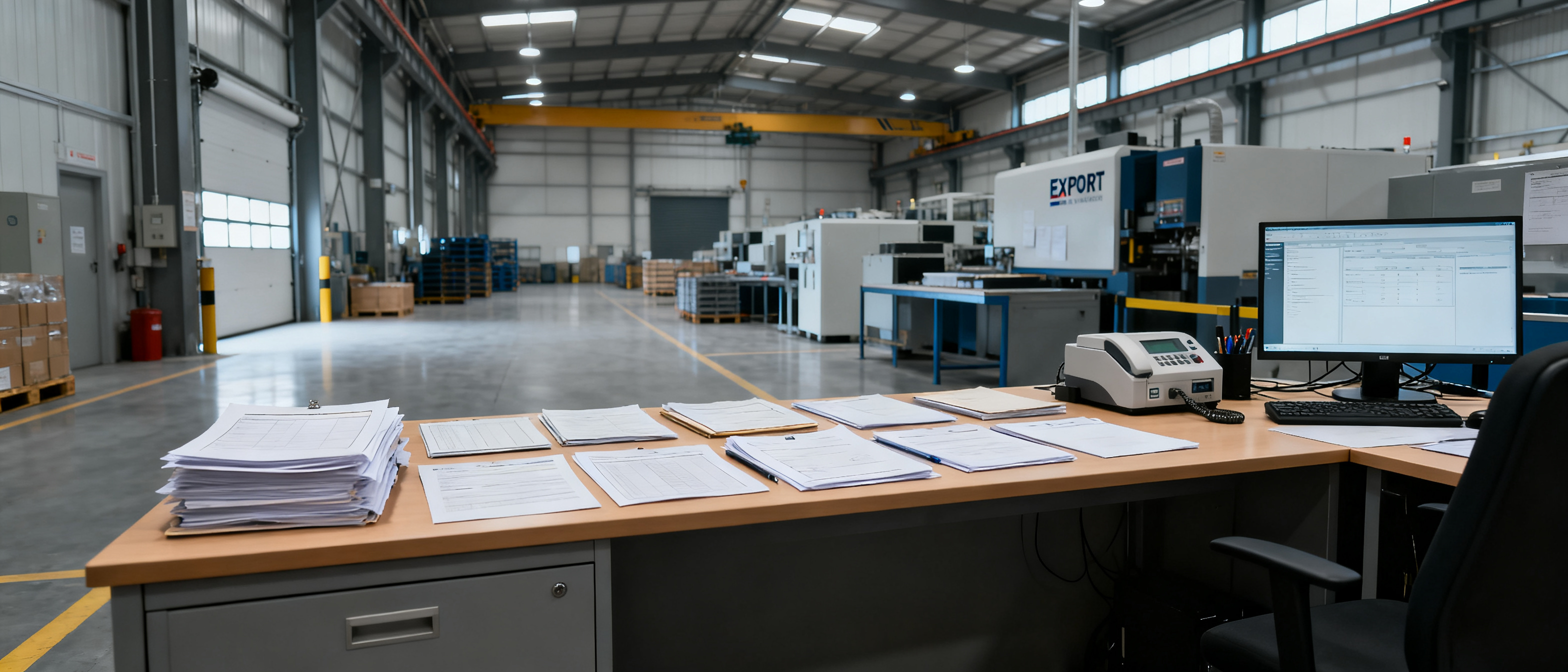
For an export factory or a regional B2B supplier, understanding how to create a website without hiring a professional isn’t about picking a cheaper DIY tool—it’s about moving to a managed frontage that delivers a buyer-trustworthy English showcase, digital card, and brochure pack from plain business knowledge, so nobody on your team has to act as a designer, copywriter, or IT admin.
What “Creating a Website Without Hiring a Professional” Really Means
When a Chinese OEM, a small Indian manufacturer, or a European component supplier searches for how to create a website without hiring a professional, the real need is rarely “another login to a drag-and-drop editor.” Factory owners and export managers want a website that works—trustworthy enough that a procurement buyer scanning it for 10 seconds will send an inquiry—without the recurring cost, decision fatigue, and language obstacles of a hired professional.
A genuine “no professional” outcome means the website-building process doesn’t ask you to:
- choose from 800 templates that look like restaurants or portfolios;
- write marketing slogans or candidate product descriptions;
- configure hosting, SSL certificates, or CDN caching;
- handle mobile layout breakpoints and Core Web Vitals;
- pay a monthly retainer just to update a certification logo or a machine list.
Instead, the business supplies a minimal, stable set of facts—company name, core solutions, production capabilities, optional certifications and product lines—and a system turns those facts into multiple deliverables automatically. That’s the line between “cheap builder” and a managed B2B frontage.
The Real Costs of Hiring a Web Professional for a Factory Site
Hiring a web professional sounds reassuring, but for a thin B2B showcase—the kind of 4–6 page English presence an overseas buyer actually needs—the economics rarely add up. A typical small factory project can quickly spiral:
- One-time build: freelance quotes range from $800 for a bare-bones WordPress site to $2,500–$3,500 once a “professional” scopes a custom theme, product slider, and contact form.
- Content friction: the owner still has to provide the raw company story, product categories, images, and certifications—often across language barriers—while the web person reworks them into a site structure that may not align with how B2B buyers scan.
- Ongoing maintenance: hosting, security patches, and layout fixes average $150–$300/year, and that’s before charging for any content change. Adding a new machine photo or an updated certificate can take days and an extra invoice.
- Risk of over-engineering: many freelancers or small agencies default to feature-heavy CMS installs, bloated page builders, and tracking scripts that hurt mobile speed and complicate future handovers, effectively locking the factory into a permanent web-person dependency.
For a manufacturer who simply needs a thin English presence that proves legitimacy—not an enterprise portal—these costs and delays are the real penalty, not the concept of “having a website.”
DIY Website Builders: Can They Replace a Professional?
Platforms like Wix, Squarespace, and template marketplaces promise that you can create a website without hiring a professional by dragging and dropping. The catch is that they replace the hired pro with you—forcing a factory owner to step into the web-professional role, just without the skills.
In practice, building a supplier site on a DIY platform still demands:
- picking an appropriate template from hundreds of consumer-facing designs (most options scream “café” or “portfolio,” not “OEM factory”);
- writing English copy that explains manufacturing capabilities in a way overseas buyers trust—something template placeholders don’t solve;
- sourcing and cropping product images that look consistent across a home page, product page, and mobile card;
- tuning SEO titles, meta tags, and structured data manually, or leaving them empty and essentially invisible to Google;
- testing across devices and repeatedly tweaking layouts that break on smaller screens.
Even if the factory owner successfully publishes a site, the result often lacks the thin, fast, trust-signal density that a B2B frontage requires. Buyers scanning a site in seconds notice misaligned fonts, missing contact details, or a generic “About Us” that sounds like a filler paragraph. The DIY route replaces a hired professional’s fee with a hidden cost: the owner’s own time and credibility, spent trying to play a role they never wanted.
When a Managed Frontage Removes the Need for a Pro (B2B Frontage Auto $59)
This is where the logic flips. Instead of asking “which tool can I learn?”, the alternative becomes “what if the platform already knows what a factory site should contain and just needs my facts?” B2B Frontage is built precisely for that hand-off: an opinionated, managed English frontage that assembles a complete business presence—site, digital card, PDF brochure, and short share links—from one small set of manufacturer knowledge, with zero design decisions, no code, and no web person required.
Under the Auto $59/year plan, you provide your company’s essentials once:
- company name, overview, and core solutions (what you make);
- optional certifications, production lines, and product categories;
- your preferred contact methods and a simple logo or key image.
The platform then generates a thin, fast B2B showcase on your own domain or a clean subdomain, a downloadable PDF brochure, a mobile-optimized digital card, and shareable short links—all consistently reflecting the same business facts. There is no page builder to learn, no template to tweak, and no monthly maintenance chores. When a certification or product line changes, you update it once in your Business Details; every asset refreshes automatically.
Compared to the DIY path, this removes the owner-as-webmaster burden entirely. Compared to hiring a professional, it collapses upfront spend from thousands of dollars to a fixed $59/year, eliminates back-and-forth on design and copy, and ensures the site stays live without a web admin. The Auto plan is intentionally narrow—a thin B2B frontage, not an enterprise CMS—and that’s the point: you get a business asset that does its job while you ignore it. For a concrete live example, an injection moulding supplier’s managed frontage is visible at demo.getb2bsite.com/molding.
| Approach | Time to go live | Upfront cost | Ongoing maintenance | B2B trust signal | Owner effort |
|---|---|---|---|---|---|
| Hire a freelance pro | 2–5 weeks (or more) | $800–$3,500 | $150–$300+/year + per-update fees | High, if correctly briefed | Heavy: content gathering, revision rounds |
| DIY website builder | 1–4 weekends of owner time | $120–$300/year (premium plans) | Self-managed; no fallback | Low—often looks generic | Very heavy: owner acts as designer & writer |
| Managed frontage (B2B Frontage Auto $59) | Same day, once business facts are submitted | $59/year | Zero—fully managed platform | High: thin, consistent buyer-ready pack | Minimal: facts-once, assets assembled automatically |
Because the platform isolates every tenant at the SEO level, factories run on demo.getb2bsite.com or a custom domain without competing for the same keywords. You get an independent English presence that works alongside Alibaba, Made-in-China, Thomasnet, or any marketplace—an own-domain page that buyers trust when they verify your business. For more on how to stop acting as your own web team, browse our blog.
FAQ
Can I use my own domain name with B2B Frontage’s Auto plan?
Yes. After your managed frontage is live, you can point your existing domain (or a new one) to it with a simple DNS setting. The platform supports custom domains at no extra cost, and the transition doesn’t require a web professional—just update a CNAME or A record following provided instructions.
What if I need to add a new product line or certification later?
You update your Business Details once inside the dashboard. The site, digital card, brochure, and share links all refresh automatically to reflect the change, with no need to edit HTML, reposition sections, or re-export PDFs. This self-update capability is built into the Auto $59 plan specifically so you never need to hire someone for content changes.
Is a thin 4-page site really enough for serious B2B buyers?
Procurement and sourcing teams often scan a supplier’s site for about 10 seconds to confirm legitimacy, check factory capability, and find a way to inquire. A clean, fast showcase that clearly states what you make, lists certifications and production lines, and shows verified contact channels usually works better than a bloated 20-page corporate site. The buyer needs trust signals and a path to inquiry—not a marketing brochure.
Do I still need a professional to design the brochure or digital card?
No. B2B Frontage generates all assets from the same set of facts. The digital card and PDF brochure follow a consistent template layout that’s already tailored for B2B factories, so the output is uniform and ready to share. There’s no designer involved at any stage, and the brochure can be downloaded directly from your frontage.