2026-08-07
How Much Traffic Will My Factory Website Get? Why That’s the Wrong Question
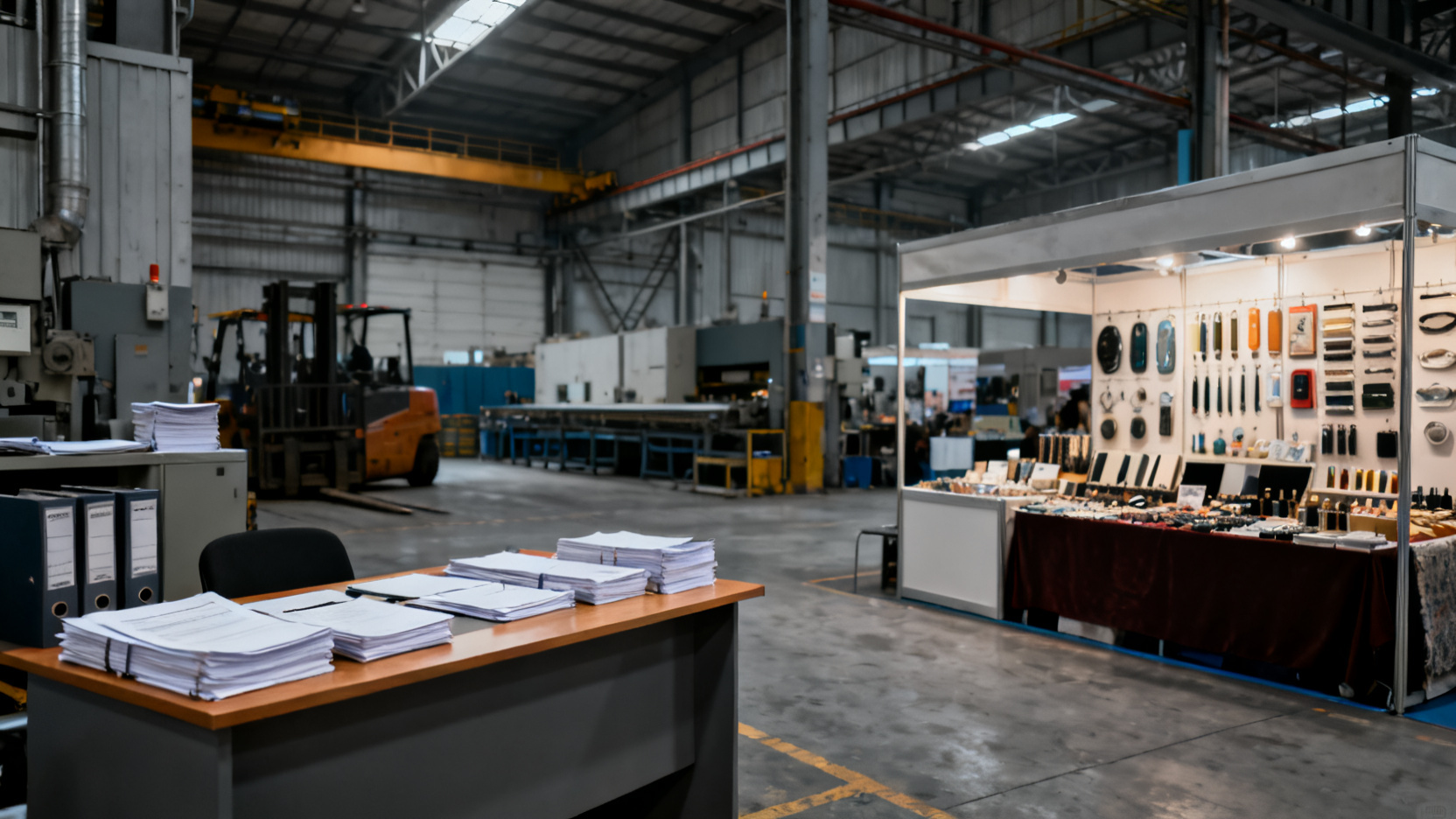
If you're running an export desk for a Chinese OEM factory, you've probably asked some version of how much traffic will my factory website get before you even publish the first page. It's a fair reflex — after years of chasing Alibaba clicks and trade-show leads, the instinct is to measure every digital asset by its ability to pull eyeballs. But for a thin English factory showcase — the kind of single-page or three-page site that sits on your business card, your WhatsApp profile, and the bottom of your email signature — that question skips the real reason the site exists. This post is written for Chinese export factories, overseas small-batch manufacturers, and the procurement teams who scan their sites. It reframes traffic as a downstream metric and explains what to measure first.
The traffic question every export desk asks
Walk through any Canton Fair aisle or scroll through a WeChat group of export managers, and the question surfaces within minutes: how much traffic will my factory website get if I build one outside Alibaba? The expectation is shaped by platforms. On Alibaba or Global Sources, traffic is part of the package — you pay for listing placement, RFQ matching, and the platform's domain authority. A standalone English showcase doesn't inherit that. It starts from zero, and for most small manufacturers, it stays small by design. That's not a flaw. A thin showcase isn't competing with a marketplace algorithm; it's serving a different function entirely. The buyers who land on it usually arrive through a direct link — from a WeChat message, a QR code on a brochure, a LinkedIn DM, or a booth conversation. They're not discovering you through a Google search for "CNC machining supplier Shenzhen." They already know who you are and want to verify you before they reply to the email.
Why "guaranteed traffic" is the wrong success metric for a thin showcase
When someone promises "guaranteed traffic" for a factory website, they're selling a story that works for ecommerce funnels, not for B2B trust-building. An English factory frontage — the kind B2B Frontage builds — is lean by necessity. It's a digital handshake, not a lead-generation engine. Measuring it by monthly visitors misses the point. Here's a quick comparison:
- Thin Auto showcase (B2B Frontage): One to three pages, subdomain included, optimized for forwardability. A buyer clicks a link, sees your certifications, factory photos, and a clear inquiry path, and decides within 15 seconds whether to trust the sender. Traffic is low, intentional, and high-context.
- Expecting Google traffic like Alibaba: Requires ongoing content production, backlink building, technical SEO, and months of domain aging. A thin showcase doesn't do that — and shouldn't pretend to. The moment you bolt on that expectation, you're building a different product with a different price tag.
If a buyer visits your showcase and doesn't inquire, the problem is rarely "not enough people came." It's almost always that the page didn't answer the three questions every procurement manager asks silently: Is this factory real? Can they make what I need? How do I reach them right now?
Where inquiries really start for small manufacturers
For the ICP this site serves — Chinese OEM factories and overseas small-B manufacturers — inquiries rarely begin with a Google search. They start in a WhatsApp thread, a WeChat moment, a forwarded email, or a LinkedIn connection request. The buyer has already seen your company name somewhere. The showcase is what they check before they type "Yes, please send the quote." This is why platforms like Alibaba still dominate discovery, but a standalone domain holds the trust when the buyer leaves the booth. The platform introduces you; the factory frontage confirms you. If you're only measuring how much traffic will my factory website get from organic search, you're ignoring the 80% of inquiry paths that arrive through direct shares, messaging apps, and trade-show follow-ups. A showcase that loads in under two seconds on a patchy 4G connection at a Ho Chi Minh City expo hall is worth more than a bloated WordPress site that ranks for three keywords but takes eight seconds to render.
What to measure instead: forwardability, clarity, and inquiry path
If traffic isn't the right KPI, what is? Three things matter more for a thin English showcase:
- Forwardability. Can a procurement manager share your site in one tap and have it load instantly on the recipient's phone? A subdomain like
yourfactory.demo.getb2bsite.comwith a clean preview card passes this test. So does a short link on a digital business card. If the page stutters or the layout breaks on mobile, it fails. - Clarity. Within three seconds of landing, can a buyer identify what you manufacture, where your factory is, and whether you hold relevant certifications? If they have to scroll past a hero slider or decode machine-translated English, the showcase isn't doing its job. Clarity beats design flourishes every time.
- Inquiry path. Is there exactly one obvious next step? A WhatsApp button, a contact form, an email link — not all three competing for attention. The best inquiry path is the one that matches how the buyer already communicates. For Southeast Asian procurement teams, that's often WhatsApp. For European SMEs, it might be email or a short contact form.
These three metrics — forwardability, clarity, and inquiry path — cost nothing to track. You don't need analytics dashboards. You just need to watch whether the people who receive your link actually reply. If they don't, the showcase needs work, regardless of how many strangers stumbled onto it from a search engine.
Where Auto $59 fits — and where custom SEO work begins
The Auto plan at B2B Frontage costs $59 per year and includes a thin English showcase, a digital card, a downloadable brochure page, and short-link support. A subdomain is included at no extra charge; domain assistance is available at checkout if you want to connect your own domain. This is the boundary: Auto covers a fast, clean, forwardable factory frontage. It does not include ongoing content marketing, backlink campaigns, or technical SEO audits. If you need a larger CMS with custom product catalogs, multi-language support, or a content strategy designed to attract organic search traffic, that falls under custom work — quoted separately. The #rules page spells out these boundaries clearly, and it's worth reading before you decide which tier fits your needs. Auto is for the factory that wants a professional English handshake online, not a traffic machine. If you're still asking how much traffic will my factory website get as your first question, you might be shopping for the wrong product.
FAQ
Will a B2B Frontage showcase rank on Google and bring me inquiries?
A thin Auto showcase is not built for organic search rankings. It can be indexed, and its technical foundation — lightweight HTML, fast load times, clean structure — aligns with web.dev performance best practices. But ranking competitively for terms like "CNC machining factory China" requires dedicated SEO work: content depth, domain authority, and consistent off-page signals. The Auto plan doesn't promise that, and we won't invent traffic projections to sell it. What the showcase does is give you a credible, shareable English presence that buyers trust when they receive your link through other channels.
How is this different from an Alibaba storefront?
Alibaba is a discovery platform. Buyers search for products, compare suppliers, and send RFQs without ever leaving the ecosystem. A B2B Frontage showcase is a standalone trust asset — it lives on its own subdomain or domain, carries no platform branding, and serves as the destination you send buyers to after they already know your company name. Many export factories use both: Alibaba for inbound discovery, and a thin showcase for outbound credibility. They serve different stages of the buyer's journey.
What exactly does the $59 Auto plan include?
The Auto plan includes a thin English showcase (typically one to three pages), a digital business card, a downloadable brochure page, and short-link generation. A subdomain under demo.getb2bsite.com is included. You can connect your own domain with assistance at checkout. It does not include custom design, advanced CMS features, multi-language builds, or SEO services. For those, we quote custom projects individually. See the CNC demo for a structural reference of what Auto delivers.
If I connect my own domain, will I get more traffic?
Connecting a custom domain doesn't automatically generate traffic. It does make your showcase look more established — yourfactory.com reads as more permanent than a subdomain — and it gives you full control over the URL you print on brochures and business cards. Over time, if you invest in SEO separately, a custom domain accumulates its own authority. But the domain itself is a credibility signal, not a traffic lever.
References & Further Reading
- B2B Frontage Demo Hub — Browse the showcase structure and see what a thin English factory frontage looks like in practice.
- CNC Machining Factory Demo — A structural reference for the Auto plan, showing the typical page layout, inquiry path, and brochure integration.
- B2B Frontage Rules & Boundaries — Honest scope: what the product does and doesn't do, including traffic and ranking expectations.
- B2B Frontage Blog — More articles on factory showcases, English site strategy, and procurement-side expectations.
- web.dev — Performance & Best Practices — Google's resource on fast-loading, mobile-friendly web pages, which directly informs how thin showcases are built.
- Next.js Documentation — The framework underlying the showcase infrastructure, chosen for static generation speed and minimal client-side overhead.