2026-08-19
Global Sources Booth vs Own Domain for RFQ Follow-Up Trust
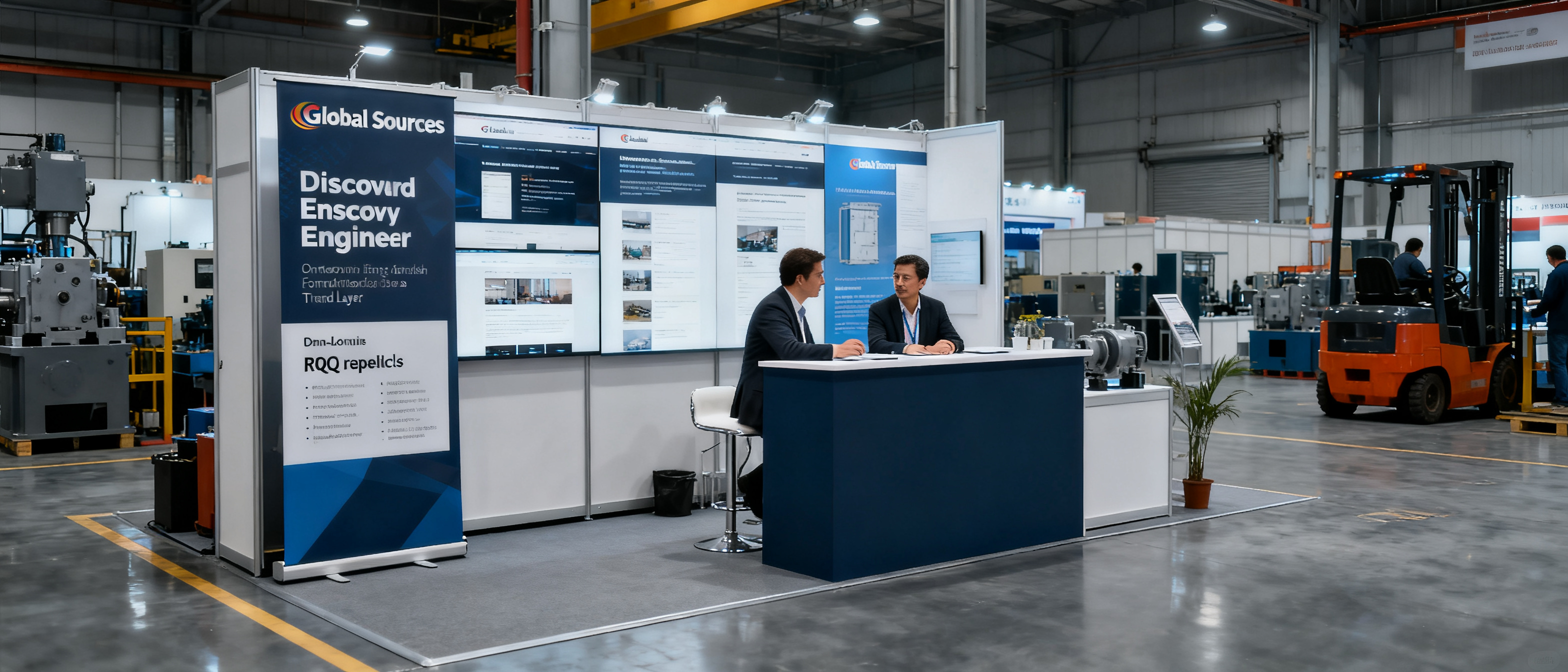
When you reply to a buyer’s RFQ from your Global Sources booth, including a link to your own domain can be the difference between a quick scan and a serious conversation. The global sources booth vs own domain for rfq follow-up debate isn’t about replacing discovery—it’s about adding a trust layer that a booth page alone can’t provide. A booth page puts you in front of buyers; an own‑domain English frontage gives them enough confidence to move forward after the first email.
What a Global Sources booth does well for RFQ discovery
Global Sources (and similar B2B platforms like Made-in-China, IndiaMART, or Europages) excel at matching supplier profiles with active buyer intent. A booth page helps you show up in category searches, display verified badges, and receive structured RFQs. The platform’s traffic and buyer-screening tools are genuine discovery engines—especially for export factories and small manufacturers that don’t have a large marketing budget.
Key strengths of a booth page during the RFQ phase:
- Built‑in buyer traffic that already trusts the marketplace.
- Standardized product listings and inquiry forms that lower the barrier to a first contact.
- Verification badges and transaction history (e.g., “Verified Supplier” or “Onsite Check”) that signal basic legitimacy.
- RFQ inboxes that keep all initial messages in one place, making it easy to reply quickly.
These features are optimized for discovery—the moment a buyer finds you and decides whether to send that first request. But what happens after you hit “send” on your reply?
The RFQ follow‑up gap: why buyers visit your own domain — global sources booth vs own domain for rfq follow-up
Once you reply to an RFQ, the buyer often does a quick credibility check before moving deeper. A 2023 survey by web.dev on e‑commerce trust found that 75% of users judge a company’s credibility based on its website. If your reply only contains a booth link, the buyer stays within the platform’s walled garden—where your profile looks similar to every other supplier. They can’t easily forward your information to a colleague, and they can’t bookmark your company for later. A booth page is a transient discovery touchpoint; an own domain is a permanent, shareable asset.
The gap is even more pronounced in B2B. Buyers often need to loop in procurement teams, engineers, or quality managers. A booth link forces them to say, “Search for Supplier X on Global Sources.” An own‑domain link (like yourfactory.com) lets them forward a single, clean reference that works outside the platform. This simple shift often determines whether a conversation dies after the first reply or turns into a multi‑stakeholder RFQ negotiation.
Own domain as a trust layer: what a thin English showcase can do that a booth page can’t
An own‑domain English frontage doesn’t need to be a heavy, multi‑page CMS. Even a thin, well‑organized showcase—something a sensor manufacturer or a small metal‑fabrication export desk can maintain—adds layers of trust that a booth page cannot replicate:
| Trust Factor | Global Sources Booth Page | Own‑Domain Showcase |
|---|---|---|
| Forwardability & bookmarks | Platform link, may require login | Clean URL, no login needed |
| Control over narrative | Limited by template fields | Full control over company story, solutions, certifications |
| Perceived permanence | Can be suspended or delisted | Domain you own; signals long‑term commitment |
| Professional contact details | Platform‑managed inbox | Direct email, phone, or WhatsApp; builds personal trust |
| Buyer’s confidence in follow‑up | “Another supplier on the marketplace” | “A real company with a real address and a real website” |
A thin English showcase can answer the questions that procurement teams ask after the first RFQ: “Who are you really? Where are your certifications? What does your factory floor look like?” A booth page can show some of this, but it’s trapped inside a platform profile that looks like everyone else’s. An own domain lets you craft a consistent, credible answer that you can update once and reuse across every RFQ reply, email signature, and digital business card.
When a managed frontage like B2B Frontage fits (without a website team)
For export factories and small manufacturers, the idea of “just get a website” often falls apart because it assumes an IT team. A managed frontage like B2B Frontage removes that burden. Instead of a DIY site builder where you still have to arrange pages, fonts, and hosting, B2B Frontage provides a thin, opinionated English showcase built from the business knowledge you already have—company overview, solutions, optional certifications and production lines. You maintain those facts once, and the platform assembles a site, a digital card, a brochure, and short links that you can drop into every RFQ response.
As an example, a sensor manufacturer using B2B Frontage’s sensor demo can turn a simple set of facts into a clean, buyer‑ready page that answers the top five questions an overseas buyer asks within 10 seconds of scanning. The whole thing runs on your own domain, costs a flat $59/year, and requires no ongoing maintenance. That’s a realistic trust layer for a factory that can’t afford a web team—and it complements the discovery power of a Global Sources booth without trying to replace it.
Platforms help buyers find you. An own‑domain page helps them trust you and start a conversation. Using both is not a conflict; it’s a follow‑up strategy that many export desks still overlook.
FAQ
Do I still need a Global Sources booth if I have my own domain?
Yes—if you rely on the platform’s buyer traffic for discovery. A booth page is a lead‑generation tool; an own domain is a trust‑building tool. The two work together. Most manufacturers keep their booth active while embedding their own‑domain link in every RFQ reply, email footer, and digital card.
Can I just link to my company’s LinkedIn page instead of a website?
A LinkedIn profile is better than no external link, but it still sits inside a platform that buyers may not use. A dedicated own‑domain page is more neutral, more permanent, and easier to forward to a non‑LinkedIn user. For B2B procurement, a real website signals a higher level of commitment than a social media profile.
How much content does a trust‑building own‑domain page need?
A thin showcase of about 3–5 sections is enough: company summary, core solutions, certifications, and a clear way to contact you. The goal is to confirm legitimacy and answer the buyer’s immediate “who are you?” question—not to build a full corporate portal. A managed frontage can deliver that in a few hours without a developer.
Will a thin own‑domain page help with SEO?
It can, but the primary goal here is RFQ follow‑up trust, not search engine ranking. Even a simple, informational page on your own domain can be indexed and may appear for your company name, which helps buyers who search for you after receiving an RFQ reply. Long‑term, it’s a foundation for a more discoverable presence.
References & Further Reading
- Web.dev: Best practices for trust and credibility signals – Google’s guidance on how users evaluate site credibility.
- Global Sources: RFQ and booth FAQ – Official platform documentation on how RFQ matching works.
- Google Search Central: SEO Starter Guide – Basics of making your own domain findable, even with a small site.
- B2B Frontage Blog – More articles on B2B frontage, managed showcases, and RFQ follow‑up strategies.
- Next.js: Optimizing for trust and performance – Technical perspective on how fast, stable pages influence buyer confidence.