2026-09-15
Compare Aestiva Sourcing RFQ vs. Global Sources in 2024
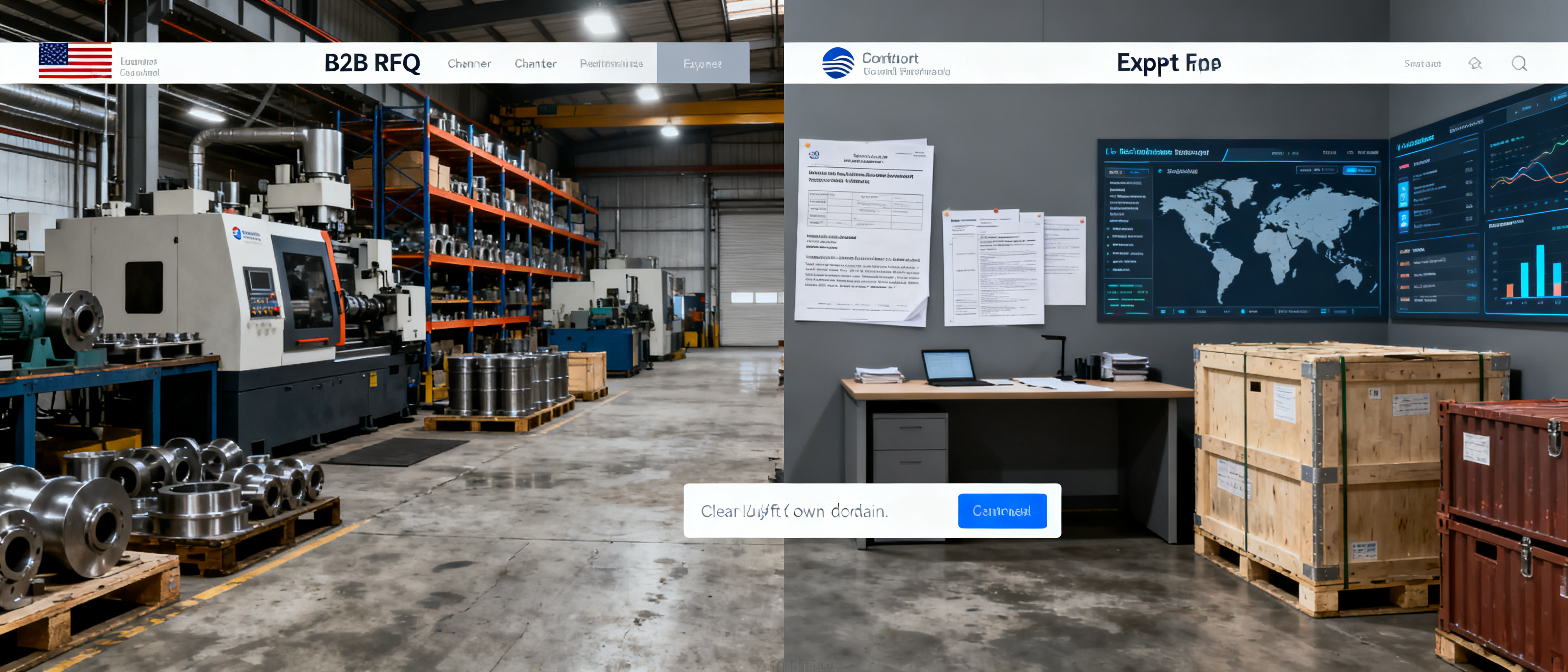
If you export industrial parts or consumer goods, you've probably wondered whether the RFQ funnel from a niche US sourcing platform can outperform the broad Asian export marketplace you've used for years. Many factory owners and small manufacturers compare Aestiva Sourcing RFQ vs. Global Sources in 2024 because each channel attracts a very different kind of buyer and carries its own cost structure, lead quality, and trust signals. Here we break down how these two RFQ processes actually work, who uses them, and why adding your own lightweight English frontage makes any marketplace inquiry far more likely to get forwarded and turn into a real conversation.
What is Aestiva Sourcing and How Does Its RFQ Process Work? Compare Aestiva Sourcing RFQ vs. Global Sources in 2024
Aestiva Sourcing is a procurement-software and managed-sourcing service that mainly serves North American industrial companies — OEMs, machine shops, and mid-sized manufacturers who need to purchase custom parts, castings, fabrications, or electromechanical assemblies. Unlike a traditional supplier directory, Aestiva often acts as a sourcing concierge: a buyer uploads a drawing, RFQ, or specification, and Aestiva’s team (or its automated matching) routes the request to a pre‑vetted network of suppliers, many of them smaller North American job shops but also including qualified Asian export factories that can meet US quality standards. In 2024, an Aestiva RFQ typically arrives as a detailed email or dashboard notification with technical prints attached. The supplier is expected to quote within a narrow window, and the entire thread stays inside Aestiva’s system — you may never get a direct buyer email until the project is awarded.
For a Chinese OEM or overseas small‑B manufacturer, the appeal is clear: you see real engineered requirements, not generic “send me your catalogue.” The trade-off is volume. Aestiva is not a high-impression marketplace; it’s a curated channel where one good quote might open a multi‑year contract, but the total number of monthly RFQs you receive will be far lower than on a mass-platform. Costs vary by engagement model — some suppliers pay a subscription or a per‑lead fee, while others are invited into a customer’s private vendor pool at no upfront cost. Because the platform focuses on North American industrial procurement, it often demands ITAR, ISO, or material‑traceability documentation upfront, which can filter out suppliers who aren’t export‑ready.
Global Sources 2024: How RFQs Reach Your Export Desk
Global Sources remains one of the longest‑standing B2B marketplaces connecting Asian manufacturers with overseas buyers. In 2024, its RFQ system works more like a broadcast: a registered buyer (typically an importer, distributor, or retailer) fills in a request form specifying product category, volume, target price, and shipping terms. That RFQ is then matched to supplier profiles based on the products you’ve listed, your verification badges, and your response history. The inquiry drops into your supplier dashboard, often as a templated email that includes the buyer’s company name and country but little else. Unlike Aestiva’s engineered‑parts tunnel, Global Sources attracts consumer goods, electronics, gifts, home products, and fashion accessories — categories where specs are frequently communicated through jpeg sheets rather than CAD models.
A paid membership (Gold Supplier or similar) unlocks the ability to see full buyer contact details, send unlimited quotes, and appear higher in matching algorithms. In 2024, a standard export membership starts around US$4,000–6,000 per year, not counting optional trade‑show booths. While the volume of RFQs is high, many are untargeted — a buyer may blast the same request to 20 suppliers — so your response‑to‑meeting conversion depends heavily on how quickly and professionally you reply.
To make the differences concrete, here’s a side‑by‑side look:
| Aspect | Aestiva Sourcing RFQ | Global Sources RFQ |
|---|---|---|
| Primary buyer geography | North America (US/Mexico/Canada) | Global, heavy Asia‑Pacific, Middle East, South America |
| Typical product categories | Custom parts, castings, CNC machining, industrial assemblies | Consumer electronics, gifts, home, fashion, promotional items |
| RFQ detail level | Engineering drawings, material specs, tolerances | Product images, target price, MOQ, shipping preferences |
| Supplier cost model (2024) | Subscription or per‑lead; often zero if invited into a private pool | Annual membership US$4,000–6,000; verified status extra |
| Lead volume | Low, highly qualified | High, mixed quality |
Platform RFQ vs. Own-Domain Trust: What Buyers Forward in 2024
Here’s a pattern we see across both Aestiva and Global Sources: a buyer receives three quotes, shortlists two, and then forwards something to their engineering or procurement team for internal approval. That “something” is almost never a marketplace profile link. According to research from McKinsey on B2B purchasing, buyers now spend 45% of their time researching independently and rely heavily on a supplier’s own corporate site and third‑party references before making a decision (McKinsey, 2023). What actually gets forwarded is a clean, fast‑loading supplier domain page that shows the factory capability, certifications, and real product examples in one scroll.
When you respond to an RFQ from any marketplace, the conversation leaves the platform the moment trust needs to escalate. The buyer wants a link they can drop into Slack, WeChat, or an email without the recipient having to log in or navigate a cluttered portal. That’s why a thin, own‑domain English frontage changes the outcome: it’s not a replacement for the marketplace (you still need the discovery), but it’s the trust anchor that converts an inquiry into a forwarded recommendation. Platforms help buyers find you; an own‑domain page helps them trust you and share you.
Why a Thin English Showcase Complements Both Platforms
You don’t need a heavy content management system or a website team to get that trust anchor. What works for an industrial supplier or small‑batch manufacturer is a managed, opinionated English frontage — a five‑page showcase that holds your company facts, solution overviews, equipment list, and contact information in one lightweight package. When you already receive RFQs from Aestiva or Global Sources, a ready‑to‑use English showcase like B2B Frontage’s sensor‑demo skin (see blog examples) gives a buyer a single, forwardable page without any website maintenance burden. The idea is simple: maintain your manufacturer facts once, then assemble a site, a digital card, and a downloadable brochure from the same knowledge base.
This approach flips the usual Wix‑like logic. Instead of asking “how much can you DIY,” a managed frontage asks “why must you still DIY?” For US$59 a year, the platform swallows the remaining tech work — hosting, updates, mobile‑responsive layout — so the factory owner never touches a builder interface. When an Aestiva buyer asks “send me your factory overview,” you reply with a short link to your own domain, where they see exactly what you produce, which certifications you hold, and nothing else to distract them. That link is infinitely more forwardable than an Aestiva thread or a Global Sources message center.
Suppliers often worry about duplication: “I already list products on Global Sources, why maintain a separate site?” The knowledge‑once‑pack‑many model solves this. You type your machine list, quality certificates, and about‑us paragraph one time inside B2B Frontage. The platform then generates a site page, a digital business card for WhatsApp, and a one‑page PDF brochure. During an RFQ follow‑up, you share the card first (fast scan), then the site page if the buyer wants depth, and the brochure only when procurement asks for a formal document. No extra upkeep.
This doesn’t replace your marketplace subscription — you still need Aestiva or Global Sources for discovery. But when you compare Aestiva Sourcing RFQ vs. Global Sources in 2024, the winning supplier is often the one who can move the conversation onto a buyer‑controlled channel (like email or shared folder) with a real, on‑domain trust signal. A thin managed showcase provides exactly that.
FAQ
Which platform is better for an OEM factory targeting US buyers — Aestiva or Global Sources?
If you machine castings, fabrications, or precision components, Aestiva’s RFQ network is more likely to connect you with North American OEM buyers who can send actual engineering prints. Global Sources works better for finished consumer goods and generic assemblies where the buyer is an importer rather than an engineer. Many industrial suppliers use Aestiva for high‑value leads and keep a basic Global Sources presence for brand visibility.
How much does Aestiva Sourcing cost compared to Global Sources in 2024?
Global Sources charges an annual membership starting at about US$4,000; additional verification costs extra. Aestiva’s pricing is less public — some suppliers operate in a customer’s private vendor pool at no cost, while others pay a monthly subscription or a fee per matched RFQ. You usually need to contact Aestiva directly to get a quote based on your manufacturing capabilities and the industries you serve.
Do I still need my own website if I’m already on Global Sources or Aestiva?
Yes, but you don’t need a full enterprise CMS. A light, own‑domain English page serves as a trust passport when the conversation moves off the platform. Buyers forward a supplier’s own URL to internal teams far more readily than a marketplace message thread. A managed frontage like B2B Frontage’s $59/yr plan removes the need to hire a web person while still giving you a clean, fast showcase.
Can I reuse the product images and specs from Global Sources on my own B2B frontage?
Absolutely. Since you already own the product data, you can centralize it in a “knowledge once” tool and then assemble a website, digital card, and brochure from that single set. This avoids the headache of maintaining product info in multiple places. Just ensure image rights allow reuse; typically your own factory photos are fine.
References & Further Reading
- Aestiva Sourcing – RFQ‑driven procurement platform
- Global Sources – B2B marketplace and trade show organizer
- Web.dev – Why site speed matters for trust and conversions (Google)
- Next.js image optimization – keeping small‑business sites lightweight
- B2B Frontage Blog – practical guides for export‑ready manufacturer frontages
- McKinsey – How B2B digital sales have changed the way business buys