2026-09-16
CNC Job Shop Website Design & Lead Gen: What Buyers Verify First
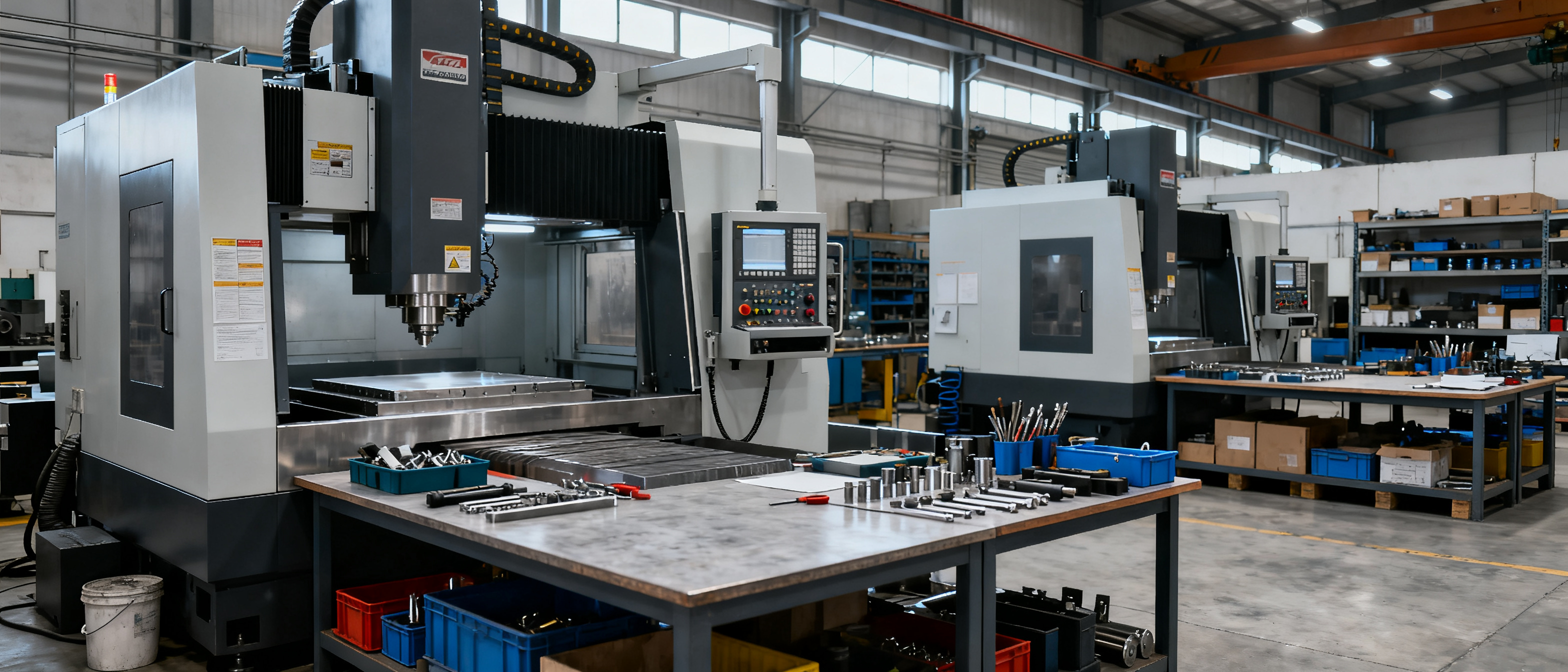
When a procurement engineer scans a CNC job shop’s website for lead generation, they aren’t reading about the company first—they’re checking whether the shop can really make their parts. A cnc job shop website design & lead gen approach that skips the verification signals buyers look for will lose high-intent RFQs before a single form is submitted. Buyers expect to see concrete machine lists, an RFQ form designed for technical details, visible certifications, and a site that loads fast on a phone. If those things are missing, they assume the shop is either hiding capability gaps or not serious about industrial work.
Machine List and Capabilities That Prove Real Work
Buyers don’t trust a CNC shop website that says “we have CNC machines.” They want enough detail to match a part drawing to an actual machine cell. The absence of a real machine list is the number one reason a sourcing manager will close the tab and move to the next supplier on a shortlist.
A verifiable machine list answers the questions every buyer silently asks:
- Which exact machine models are on the floor? (e.g., Haas VF-2SS, DMG Mori NLX 2500)
- How many axes? (3-axis milling alone isn’t the same as 5-axis simultaneous)
- What are the working envelopes? (X/Y/Z travels, max turning diameter, spindle bore)
- What tolerances can the shop hold in real production, not just a one-off?
- Which materials are run regularly—aluminum, stainless, titanium, plastics, exotics?
- Are secondary operations (grinding, EDM, anodizing, heat treating) done in-house or through qualified partners?
A table like the one below instantly converts a browser into an inquiry by removing guesswork. Generic capability pages (“CNC turning, milling, drilling”) signal a middleman or a shop that hasn’t invested in communicating its process.
| What a buyer sees | Trust signal |
|---|---|
| “We have CNC lathes and mills” | Generic – suggests possible reseller or low maturity |
| Full list: brand, model, axes, travels, max rpm, live tooling Y/N | Shop owns that machine; buyer can correlate to part geometry |
| Inspection equipment listed alongside machines | Tolerance claims have a measurement backbone (CMM, vision system, profilometer) |
| Past project examples linked to machines | Demonstrates repeatable experience, not just possession |
Machine lists also feed search visibility. A buyer searching “5-axis milling titanium job shop” is more likely to land on a page that names a specific mill and material than on a site that just says “precision CNC machining.” For a cnc job shop website design & lead gen strategy, this is a content-engineering asset, not a brochure chore.
Inquiry Path: RFQ Form, Not Just Email — cnc job shop website design & lead gen must focus here
An “info@” email address alone signals that the shop hasn’t optimized for industrial procurement. Buyers already juggle dozens of part numbers; they won’t compose a freeform email and hope you understand the tolerance stack-up. A structured RFQ form does the heavy lifting for both sides and serves as the critical conversion point in any cnc job shop website design & lead gen workflow.
Effective RFQ forms on CNC job shop websites typically include:
- Drawing/STEP file upload (size limits clearly stated, e.g., up to 25 MB)
- Material specification: grade, condition, any required mill certs
- Quantity and delivery rhythm (prototype, batch, annual forecast)
- Surface finish, coating, or heat treat requirements
- Tolerance callouts and GD&T flags
- Preferred incoterm and destination port
- NDA checkbox (opt-in during inquiry, not after the quote)
Procurement professionals are trained to evaluate supplier maturity by the friction of the inquiry path. A shop that asks the right technical questions upfront is perceived as more capable than one that just asks for name and message. This small UX choice directly influences lead quality—tire-kickers self-eliminate, and serious buyers get a reply that references their actual drawing, not a generic bounce-back.
Shops that export or serve international OEMs should also consider a short “Why we need this info” note beside the form. It reassures buyers that their IP will be handled carefully and that the details aren’t being collected for an automated spam sequence.
Certifications and Quality Proof on Display
No buyer will ask for a certificate PDF if they don’t first trust that your shop operates under a real quality system. That trust starts the moment they scan your site for a certifications page or recognizable logo. Missing evidence of ISO 9001, AS9100, IATF 16949, or a documented PPAP capability is frequently the off-ramp that kills a potential lead before the inquiry ever happens.
What procurement teams scan for within five seconds:
- Active certification logos (ISO, AS, IATF) with certifying body name, not just text
- Scope statement or certificate number — verifiable, not vague
- Photographs of the quality lab, CMM reports, or first-article inspection layouts
- Mention of documented processes: FAI, capability studies, material traceability, lot control
- Industry-specific qualification, such as Nadcap for aerospace or medical ISO 13485
An own-domain website gives shops full control over this trust layer. Marketplaces display badges in standardized cards, but a buyer who lands on your own page and sees an outdated cert or missing quality section will assume exactly that—your quality posture is dated. Even a modest “Quality” page with a certificate image and a bullet list of inspection equipment moves the needle significantly for lead generation.
Speed and Mobile Usability: What Buyers Notice Instantly
Buyers source during commutes, on factory floors, and between supplier meetings—usually on a phone. If your CNC job shop website takes four seconds to become interactive, you’ve already lost. Google’s own research on Core Web Vitals shows that pages meeting recommended thresholds have a 24% lower abandonment rate, and industrial buyers are no different.
What buyers notice—and react to—before they’ve read a single word:
- Time to first meaningful paint: If the page remains white for more than 1.5 seconds, trust erodes.
- Large uncompressed machine images that push RFQ buttons below the fold on mobile.
- Unplayable video or embedded 3D CAD viewers that block interaction on slower connections.
- Contact information hidden in a footer that requires scrolling past enormous hero banners.
Mobile-first design isn’t just a Google ranking factor; it’s a buyer-reality check. A cnc job shop website design & lead gen plan that ignores performance metrics leaves RFQs on the table. A light, clean page that loads fast and puts the RFQ button within thumb reach converts better than a media-heavy showcase that looks good only on the marketing team’s desktop. Simple steps—compressing images, using modern formats, reducing render-blocking scripts, and testing with Lighthouse—translate directly into higher inquiry rates. See how performance metrics link to business outcomes in Google’s Core Web Vitals guidance.
FAQ
What should a CNC job shop website include to generate serious RFQs?
A page built for lead generation prioritizes a detailed machine list with actual models and travels, a structured RFQ form with file upload and technical fields, visible certifications and inspection proofs, and fast mobile load times. Buyers scan these four signals before deciding to send a drawing. Everything else—company history, team photos, mission statements—is secondary trust material, not a conversion trigger.
Do I need to list every single machine on my website, or is a summary fine?
List the machines that define your shop’s competitive envelope. A turning-only shop can be brief; a shop offering 5-axis milling, Swiss turning, and wire EDM should spell out models and capabilities separately because buyers searching for a specific process use those terms. A summarized “CNC machining” page works against you when a procurement engineer types “Tsugami S206 Swiss CNC.” Even a partial but honest list builds more trust than an all-encompassing generic tagline.
Why do industrial buyers prefer an RFQ form over a plain email address?
RFQ forms guide the buyer to provide drawing files, tolerances, material, and quantities in one go, reducing the back-and-forth that delays quotations. For procurement teams evaluating multiple suppliers, a shop that asks smart technical questions on the first touchpoint is perceived as better organized and more capable. A plain email address—especially a generic one like info@—forces the buyer to guess what information you need, and many will skip that step entirely.
How quickly does a CNC job shop website need to load before buyers bounce?
Industry benchmarks and user behavior studies suggest that mobile pages should deliver interactive content within 2.5 seconds. For industrial buyers scanning shortlists, a delay of even one additional second can increase bounce rates by over 30%. Google’s Core Web Vitals data shows that pages meeting the “good” threshold retain visitors measurably better. For a shop relying on its website for lead gen, performance is not just a tech detail—it’s a conversion prerequisite.