2026-10-28
Showcase BESS Factory Infrastructure Beyond IndiaMART
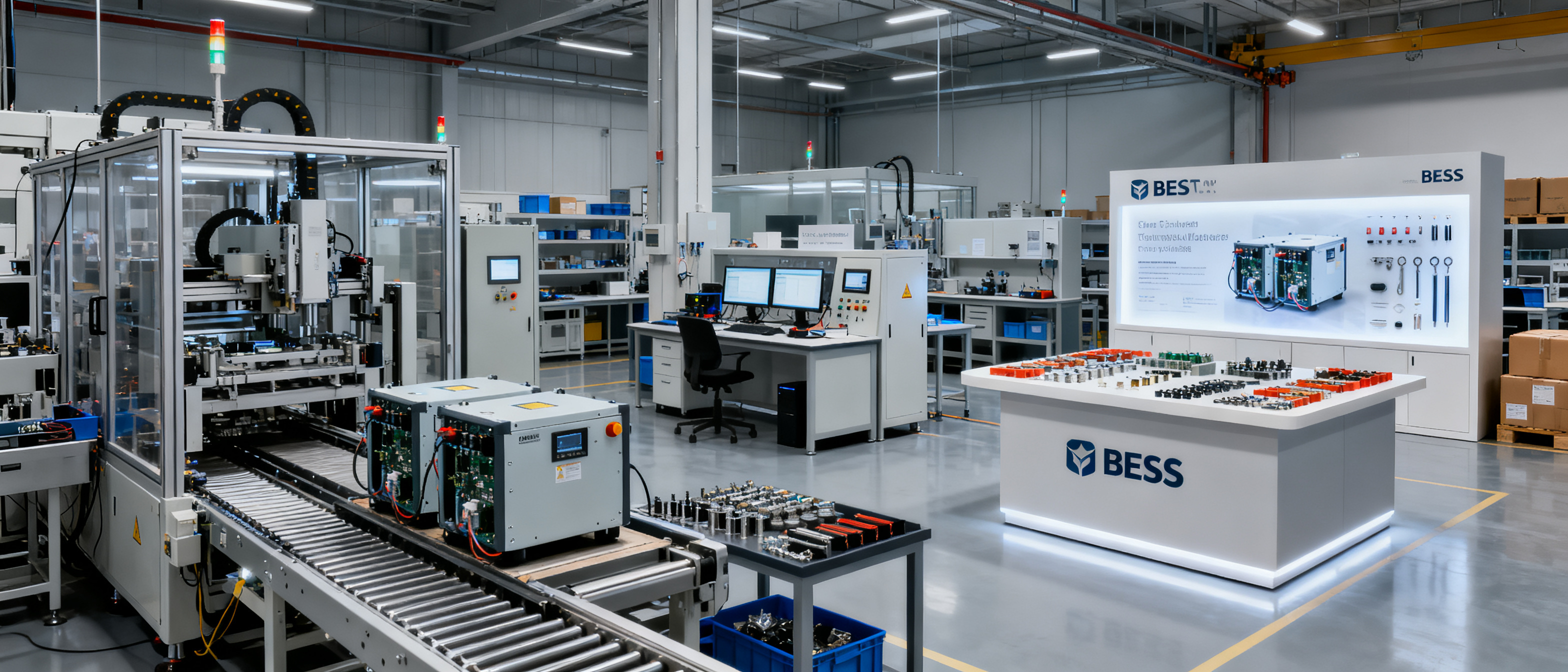
For BESS manufacturers and exporters, IndiaMART delivers initial discovery and inquiry volume. Yet once a serious procurement team moves into technical evaluation, a product catalog page no longer carries enough weight to close the deal. Buyers in this segment—utility developers, EPC contractors, energy distributors—need to showcase factory infrastructure in a form they can forward to a colleague, attach to a vendor comparison sheet, or open on a phone during a supplier audit. A standard marketplace profile rarely delivers that level of trust, and that’s where most factories lose momentum after the first contact.
Why Marketplace Photos Don’t Build BESS Trust
On IndiaMART, a typical supplier listing pushes product photos, a brief description, and a wall of certifications. While that signals availability, it doesn’t answer the one question every BESS buyer asks when the order size hits five or six figures: “What does the actual production environment look like?” Procurement teams sourcing battery racks, containerized systems, or PCS-integrated cabinets want to see clean-bench assembly, cell grading stations, environmental testing chambers, and burn-in racks—not just a retouched image of the finished unit against a white background.
The trust gap widens when you consider how these profiles are consumed. A buyer browsing IndiaMART is likely comparing multiple suppliers in parallel tabs. Without a dedicated page that walks them through the physical plant, any supplier profile looks interchangeable with the next. If a factory’s only web presence is a marketplace page, the implicit message is that the manufacturer hasn’t invested in communicating its manufacturing authority beyond what the platform provides for free. That’s a dangerous signal in BESS, where delivery capacity and quality consistency directly impact project bankability.
The Infrastructure Proof Buyers Actually Forward
When a procurement lead is convinced, they don’t forward the IndiaMART URL to the project manager; they forward a specific piece of evidence. In BESS sourcing, that evidence is often a page designed to showcase factory infrastructure—real photos of SMT lines, BMS testing benches, aging rooms, container assembly bays, and warehousing capacity. This is what gets pasted into WhatsApp groups, embedded in preliminary qualification submissions, and saved for later review when the team isn’t on a live discovery session.
We’ve seen export desks lose RFQs simply because the evidence wasn’t portable enough. A factory infrastructure page that loads in under three seconds on mobile, displays photos with geo-relevant captions (e.g., “Module aging room — 120 rack capacity, 45°C ambient testing”), and includes a short digital card with company facts becomes a standalone trust asset. Buyers treat it like a mini-audit snapshot, and it’s the single piece of content most likely to survive the forward-and-forget cycle inside procurement teams. Unlike a marketplace profile, this type of page doesn’t interrupt the reader with competing supplier ads or “send inquiry now” pop-ups; it just presents the manufacturing credentials and gets out of the way.
How to Add a Factory Infrastructure Page Without IT Hassle
Many factory owners assume that creating a stand-alone infrastructure page means hiring a web developer, setting up hosting, and managing another login. That assumption stops a lot of legitimate manufacturers from ever separating their trust layer from a platform profile. But the reality is simpler today: you can publish a factory infrastructure page by maintaining your business facts in one place and letting a managed frontage system handle the layout, speed, and device adaptation.
The process doesn’t require a CMS or a content team. The critical input is an honest set of production-floor photos (shot with a smartphone under normal lighting, not stock imagery), a bulleted list of key equipment and testing capabilities, and a concise description of what the factory can deliver on a repeatable schedule. Once those assets are organized, they become reusable across the site, a digital brochure, a shareable card, and even short links for email signatures. The value isn’t in building another website section; it’s in converting hard-won manufacturing know-how into a forwardable format that works when you’re not in the room.
- Use real production photos with captions that explain process, not just product.
- Highlight testing and quality steps—buyers look for aging rooms, cell cyclers, thermal chambers.
- Keep loading speed fast; an infrastructure page should appear within 2–3 seconds on a 4G connection.
- Include one clear contact route, but avoid aggressive inquiry forms.
From IndiaMART Profile to a Forwardable Company Page
Shifting from a purely IndiaMART-based presence to a hybrid model—where discovery still happens on the platform but trust is sealed on your own page—is more a workflow change than a full rebrand. You don’t abandon the marketplace; you simply give prospects a second destination that does the heavy lifting for credibility. Here’s how the handoff works in practice for a medium-sized BESS exporter:
- Keep your IndiaMART listing active for category-level discovery. Buyers search “BESS container 1MWh,” find your product, and initiate chat on the platform.
- During the first meaningful exchange, share a short link to your factory infrastructure page. Instead of flooding the chat with random photos, you push one clean URL that opens to production lines, testing labs, and team details.
- Follow up with a digital card and brochure generated from the same core information. This keeps your company details consistent across every touchpoint without duplicated maintenance.
The outcome is a measured B2B flow: IndiaMART handles the top-of-funnel matchmaking, while your own page absorbs the deeper technical scrutiny. Because the infrastructure page is isolated from platform algorithms and competitor noise, a buyer who lands there sees only your factory, not ten alternative suppliers in a sidebar. That focus alone often shaves days off the qualification timeline, especially when a procurement manager needs to send a single link to a supervisor for approval.
| Buyer Action | IndiaMART Profile | Own Domain Factory Page |
|---|---|---|
| First impression | Product photos, pricing bands, generic about text | Structured infrastructure walk-through with real equipment |
| Forward to colleague | Pasted link shows competing sellers and ads | Clean standalone page that loads without distractions |
| Trust signal | Platform trust (reviews, response rate) | Operational transparency & production-floor evidence |
| Information update | Manual re-upload per listing | One-time fact change propagates across site and shared packs |
FAQ
What content should a BESS factory infrastructure page include?
At minimum, include photos of key production zones (assembly, testing, packing), a clear list of testing capabilities and notable equipment, certifications with expiration dates, plant size and throughput numbers, and a short note on quality control processes. Avoid marketing copy; operations managers want data they can cross-check.
Can’t I just use my IndiaMART profile to show the factory?
You can, but a marketplace profile is optimized for product discovery, not for factory transparency. The photo gallery tends to mix product shots with random facility images, and there’s no dedicated section to showcase factory infrastructure in a structured way that buyers can reference or forward. Having a separate page gives you control over the narrative, ensuring the most convincing proof isn’t buried under unrelated listings.
How do buyers verify that factory photos are real and not stock images?
Sophisticated buyers look for consistency—exit sign languages, worker uniforms, localized production labels, and the same lighting across multiple shots. Some ask for a quick live video call pointing at specific equipment; an infrastructure page that includes short walking-tour clips or timestamped pulls from that call can preempt the request entirely. Pairing photos with audit records or a lab accreditation certificate also adds verifiable depth.
Is there a simple way to create a factory infrastructure page without an IT team?
Yes. A managed frontage service like B2B Frontage absorbs the technical layer so manufacturers just provide business facts and factory evidence. For $59/year, it assembles an English showcase page, digital card, brochure, and short links—all from one set of data—without requiring hosting, a CMS, or ongoing maintenance. The approach suits export desks that want an official presence outside a marketplace but don’t want to own a website project.
References & Further Reading
- Google Search Central — Creating helpful, people-first content
- web.dev — Why speed matters for trust and engagement
- IndiaMART Seller Help Center — Building an authentic profile
- IEA — Batteries and Secure Energy Transitions (BESS context)
- B2B Frontage Blog — Articles on B2B factory presence and outreach