2026-07-27
How to pick a textile demo without cloning one template
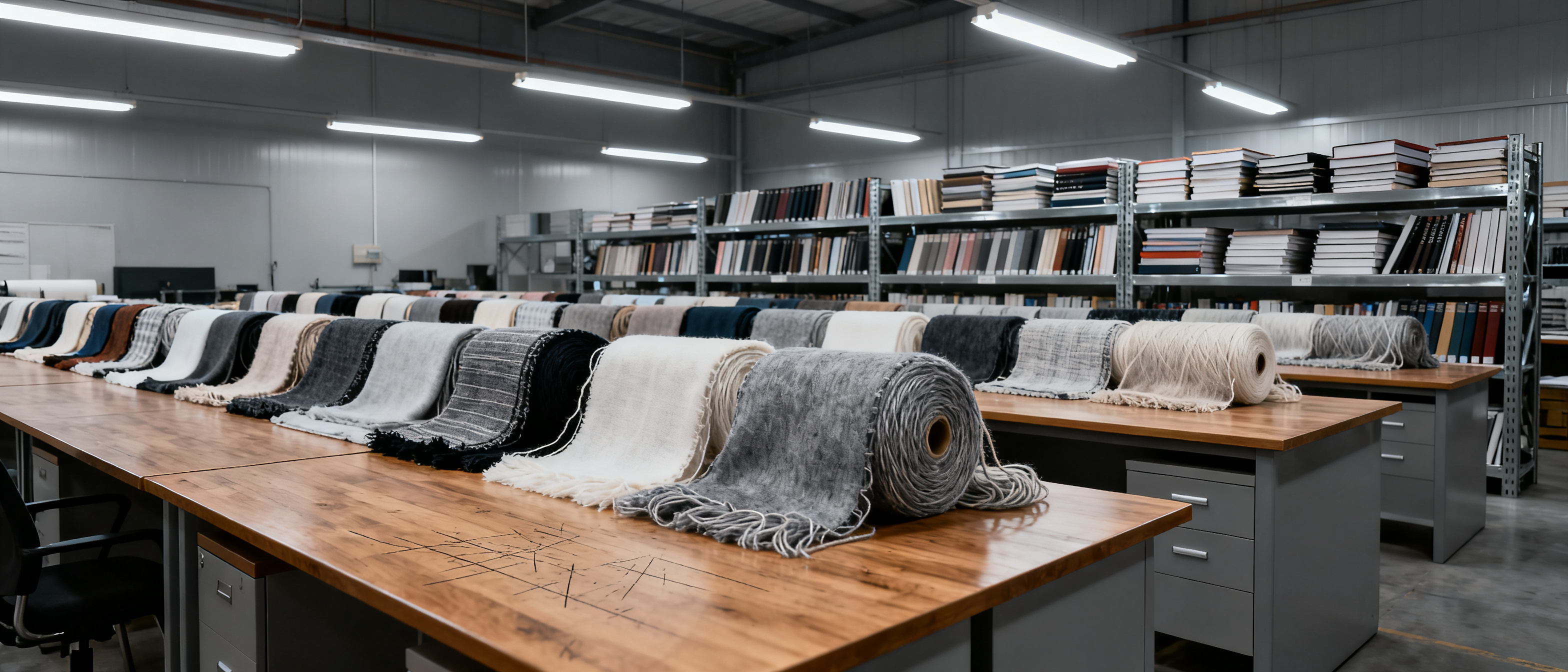
Textile demos prove pace, not your brand story
Export desks evaluating a textile factory website often fixate on the demo. They click through the sample pages, scroll the product grid, and test the inquiry form. What they are actually measuring is pace—how fast pages load, whether navigation feels snappy, and if the layout holds together on a mobile device during a buyer's commute. A textile demo confirms technical execution. It does not confirm whether your factory's specific story, production floor realities, or niche certifications will translate into the same crisp experience.
At B2B Frontage's demo, the goal is deliberately narrow: show that a thin, factory-focused showcase site loads cleanly, renders without clutter, and passes Core Web Vitals thresholds that matter for B2B search visibility. The demo is a proof of concept—not a portfolio piece, not a template to clone wholesale. When a textile export manager treats the demo as a paint-by-numbers kit, they inherit someone else's information architecture without asking whether their own buyers navigate by yarn count, by GSM range, or by end-use application. The demo proves pace. It proves the underlying stack works. The brand story, the subcategory language, and the product-to-inquiry flow must be built around that working skeleton, not copied from it.
This distinction matters because overseas buyers—procurement managers in Europe, sourcing agents in Southeast Asia, or distributor partners in the Middle East—recognize templated sameness within seconds. They visit dozens of supplier sites each week. A textile demo that has been cloned without adaptation signals that the factory invested neither time nor thought in understanding how their specific subcategory is searched and evaluated.
Match textile subcategory language to how buyers search
Textile is not one industry. A buyer searching for Oeko-Tex certified home linen uses different terminology, different filters, and different qualification criteria than a buyer sourcing flame-retardant upholstery fabric for contract furniture. The demo at B2B Frontage's textile path illustrates how a thin showcase site can structure product categories—but which categories appear, and what terminology labels them, must come from the factory's actual subcategory.
Consider how search language diverges across textile subcategories:
- Home textile buyers search by bedding set composition, thread count ranges, and certification marks like OEKO-TEX Standard 100. They want wash care icons and dimensional tolerance tables visible before they inquire.
- Fabric and piece-goods buyers search by GSM, weave type, composition blend percentages, and usable width. They expect technical spec sheets, not lifestyle photography.
- Garment and apparel accessory buyers search by MOQ per SKU, size grading charts, and lab test reports for colorfastness and shrinkage. They care about packaging options and shipping terms bundled alongside product data.
- Technical and industrial textile buyers search by tensile strength, abrasion resistance, and compliance standards like ISO 13934 or ASTM D3884. They read capabilities pages before they ever open a product gallery.
Each subcategory demands a different vocabulary in H1 tags, meta descriptions, and product table columns. The demo proves the site can render a product table. It does not populate the right columns for your buyer's technical evaluation. That mapping exercise—from buyer search query to on-page specification—is where a textile export desk earns its traffic.
Textile capabilities pages beat generic "About Us"
Overseas buyers evaluating a new textile supplier spend disproportionate time on capabilities pages. They want machine lists, annual capacity figures, quality control lab equipment, and compliance certifications. A generic "About Us" page with a founding story and a group photo of management does not answer the procurement question: Can this factory produce my order to spec, on time, with documented quality controls?
A capabilities page structured for textile buyers should surface production floor details: knitting machine gauges, dyeing batch capacities, finishing line widths, and in-house testing equipment. When a buyer searches for "cotton knit fabric supplier with in-house reactive dyeing," they expect to land on a page that names the dyeing machines and the batch size range—not a paragraph about the founder's vision. The B2B Frontage thin-site model accommodates this because the information architecture is flat and product-forward, but the content itself must be written by someone who knows the factory floor.
This is also where the pricing plan becomes practical. The table below lays out what the Auto plan supports for a textile export desk:
| Feature | Auto plan ($59/yr) |
|---|---|
| Domain + hosting | Included (platform subdomain; custom domain optional at checkout) |
| Site edits after launch | Frozen—no CMS access. Optional Flex add-on (+$15/yr) for minor copy/photo edits. |
| Capabilities page content | Set at launch; no later changes (unless Flex used for edits) |
| Blog publishing | Not available. For CMS or blog needs, inquire for a custom quote. |
| Layout changes | Not available post-launch. Custom sites by quote. |
A textile factory that expects to update machine lists, add new certifications, or publish trade-show announcements should consider a custom quote site with CMS access. The Auto plan ($59/yr) works for factories with a stable, unchanging product line and a small set of capabilities that will not shift for years. The plan is honest about its limits—the demo is not a CMS sandbox, and the B2B Frontage rules are explicit about what falls outside the flat annual fee.
Keep textile product details and inquiry forms together
A common mistake on factory showcase sites is separating the product specification from the inquiry trigger. The buyer reads a product table on one page, then clicks to a separate contact page, and in that navigation gap the thread of evaluation breaks. The textile demo at B2B Frontage demonstrates a pattern where the inquiry form sits adjacent to—or directly below—the product detail table. This matters for conversion because the buyer can reference the specification while typing their inquiry.
For textile export desks, the product-plus-inquiry pairing should include:
- A structured product table with composition, weight, width, MOQ, and certification marks.
- An inquiry form that auto-populates the product reference (or sits close enough that the buyer can copy-paste without scrolling away).
- Optional fields for the buyer to specify target FOB port, order quantity, and required lab tests—reducing the back-and-forth email cycle.
The table below compares two approaches to structuring product and inquiry elements on a textile showcase page:
| Approach | Product details placement | Inquiry form placement | Buyer friction |
|---|---|---|---|
| Separated pages | Dedicated product page | Standalone "Contact Us" page | High—buyer must remember specs or open two tabs |
| Same page, stacked | Upper section of product page | Lower section of same page, below the spec table | Low—buyer scrolls, references, and inquires in one flow |
| Same page, side-by-side | Left column | Right column (desktop); stacks on mobile | Lowest on desktop, moderate on mobile depending on breakpoints |
The stacked approach is the most reliable across devices and is what the B2B Frontage demo demonstrates. The inquiry form does not need to be elaborate—a name, email, product reference, and a free-text message field cover the majority of B2B textile inquiries. The key is proximity, not complexity.
FAQ
Can I use the B2B Frontage textile demo as a starting point for my factory site?
You can use the demo to evaluate whether the thin-site structure, page speed, and mobile rendering meet your expectations. The demo is not a downloadable template. Your actual factory site is built fresh on the same architecture but with your own product data, subcategory terminology, and information hierarchy. Cloning the demo without adapting the language and structure to your specific textile subcategory defeats the purpose—buyers in your niche will not find the generic version useful or convincing.
How long does it take to launch a textile showcase site?
For the Auto plan ($59/yr), the site is built and launched in a single phase. Once launched, the site is frozen—no CMS access, no ongoing edits. The timeline depends on how quickly you provide product data, images, and capabilities information, but the build itself is intentionally fast because the architecture is thin and focused. If you need CMS access or blog capabilities, a custom quote site is required; contact us to discuss options.
What if I need to update product listings or add new certifications after the site is live?
On the Auto plan, post-launch edits are not included as standard. The site remains as-built. You can add the optional Flex add-on (+$15/yr) for minor copy and photo edits. If you anticipate needing to update product listings regularly, add new certifications, or publish content, a custom CMS-backed site is available by quote. Contact us for a custom quote that matches your needs.
Do textile factory showcase sites rank on Google for buyer search terms?
A thin, fast, well-structured showcase site built on modern web standards has a strong technical foundation for search visibility. However, ranking depends on factors beyond the site itself: the specificity of your subcategory language, the relevance of your product content to buyer queries, and whether the site accumulates backlinks and engagement signals over time. B2B Frontage does not guarantee inquiries or rankings. The site gives you a technically sound, search-engine-friendly base—content strategy and ongoing relevance are your responsibility, which is why a custom quote site with CMS access exists for factories that want to publish fresh content.
References & Further Reading
- B2B Frontage Demo — Live thin-site showcase demonstrating page speed, mobile layout, and inquiry form proximity.
- B2B Frontage Textile Path — Textile-specific product category structure and spec-table layout example.
- B2B Frontage Rules — Full tier descriptions, scope boundaries, and what falls outside the flat annual fee.
- B2B Frontage Blog — Additional articles on thin-site strategy, B2B buyer behavior, and factory website planning.
- Web.dev: Core Web Vitals — Google's guidance on the performance metrics that matter for search visibility and user experience, directly relevant to why demo page speed matters.