2026-11-02
Metal Fabrication Website Verification: A Buyer’s Checklist for Trust
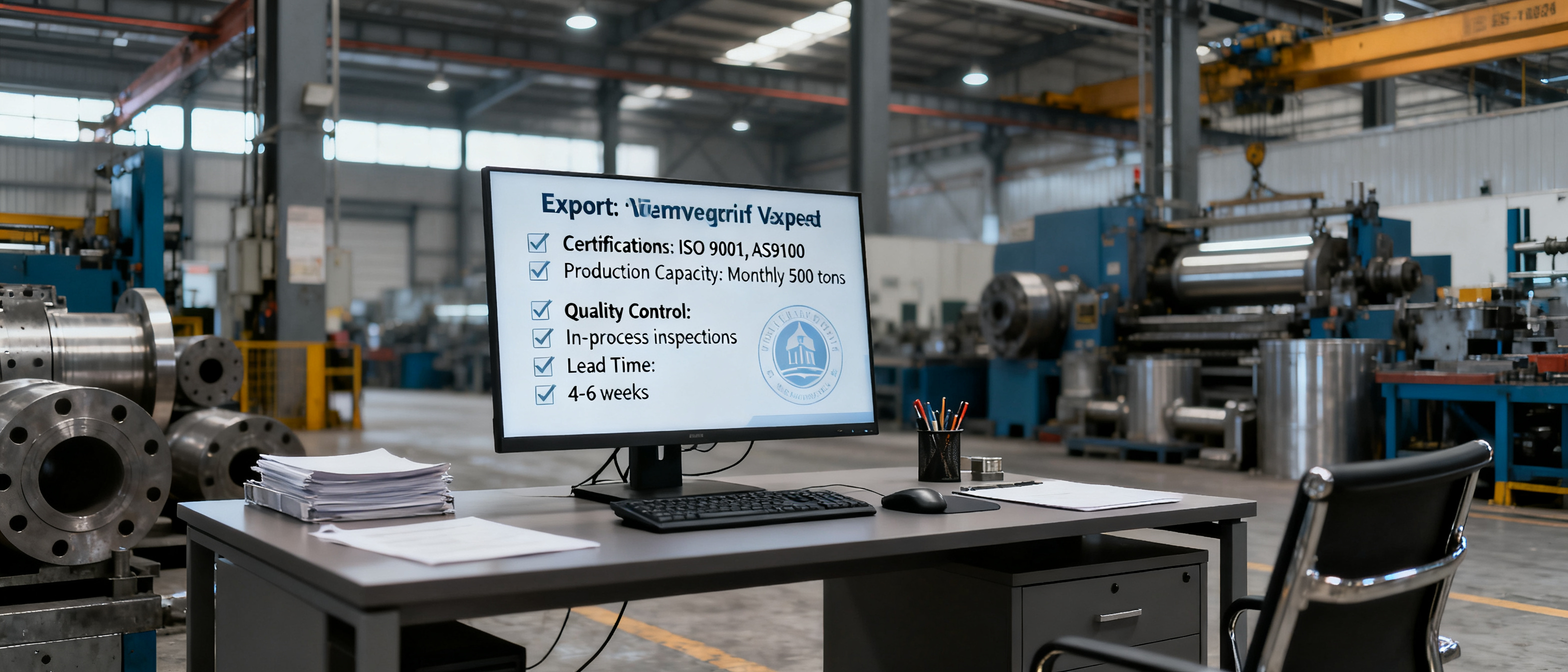
Can I build a professional website without coding? Yes — and if you’re a metal fabrication supplier selling to overseas buyers, a no‑code, well‑structured website is often the only chance you get to pass a 10‑second trust scan before a buyer clicks away. Procurement teams don’t wait for slow IT projects. They verify machinery, certifications, and real project evidence directly from your site. Miss one detail and the RFQ goes to a competitor who made your answers instantly visible. This checklist walks you through exactly what B2B buyers look for on a metal fabrication website — whether you run a Chinese export factory or a small‑B manufacturer in Ohio — and how to get it right without hiring a web team.
Why Metal Fabricators Need a Trustworthy Website — Can I Build a Professional Website Without Coding? Yes
A surprising number of fabrication shops still rely on a marketplace profile and WhatsApp‑only communication. But when a procurement engineer searches for your company name, you want an own‑domain page that confirms legitimacy, not just a repackaged Alibaba listing. The question “can i build a professional website without coding? yes” matters here because most shop owners don’t have a dedicated web person, yet buyers expect the transparency that only a real website offers. A clean, no‑code site lets you publish machine lists, quality docs, and project photos once, then keep them current without touching HTML. That shift — from IT cost to business asset — is what gets past the “is this factory real?” filter in seconds.
Machinery & Capability Specs Buyers Verify
Buyers scan for machine‑level detail in the first few seconds. They want to know whether you handle laser cutting, CNC bending, welding, or powder coating in‑house, and at what tolerances. Websites that list only abstract services like “metal fabrication” lose trust immediately. Instead, publish a filterable or simple table of your key equipment:
- Machine name and model (e.g., Trumpf TruLaser 5030, Amada HG‑1303 press brake)
- Working dimensions / tonnage (e.g., 4000×2000 mm bed, 200‑ton press capacity)
- Material range (carbon steel, stainless 304/316, aluminum 5052/6061, galvanized)
- Thickness capability (e.g., 0.5 mm – 20 mm mild steel)
- In‑house vs. outsourced — clearly mark what you control vs. sub‑contract
A simple structured list — not a scanned PDF — makes your capabilities indexable and scannable. And when a buyer searches for “stainless steel laser cutting tolerance ±0.1 mm,” your page can rank because the facts are in clean HTML, not hidden inside a blurry image.
Certifications & Compliance That Matter
Procurement departments need to tick compliance boxes before sending any drawing. The most frequently checked certifications on metal fabrication sites include:
| Certification | What It Signals to a Buyer |
|---|---|
| ISO 9001:2015 | Basic quality management system; minimum for many OEM contracts |
| ISO 3834 / EN 1090 | Welding quality requirements (structural steel, Europe) |
| ASME U-Stamp / R-Stamp | Pressure vessel fabrication (North America) |
| RoHS / REACH | Material compliance for EU markets |
| UL / CE / UKCA | Electrical safety and product conformity |
Simply naming a certificate isn’t enough. Buyers look for a visible certificate number, issuing body, and validity date. If you update your ISO certificate each year, your site should reflect the current document — otherwise an expired badge does more harm than good. Place these details on a dedicated “Quality” or “About” page, not buried in a footer icon.
Visual Proof: Past Projects & Factory Floor
This is where procurement teams make the final trust call. A gallery of finished product photos with brief context (industry, material, volume, destination country) answers “Do they really do this work?” far better than a generic “we provide OEM service” banner. Three types of images matter:
- Finished part close‑ups showing weld quality, surface finish, and tolerances — ideally with a scale or reference object to prove size.
- In‑process shop‑floor shots that show real operators, clean production lines, and un-staged equipment. Buyers can spot stock photos instantly, and trust drops when they do.
- Packing / shipping images demonstrating export readiness: fumigated pallets, sea‑worthy crates, container loading. These signal you’ve shipped to foreign markets before.
For a buyer scanning on a phone, a page that loads these images fast matters more than a gallery plugin that bloats the page to 12 MB. Stick to compressed JPEGs (modern WebP if possible) and lazy‑loading — Google’s Core Web Vitals guidance on LCP stresses that visuals shouldn’t push load time beyond a couple of seconds. A factory that shows clear, fast‑loading proof signals operational competence.
Contact & RFQ Process Transparency
A “Contact Us” form alone doesn’t convince a buyer. They want to know exactly how their RFQ will be handled. A transparent “How to Inquire” section removes friction and weeds out tire‑kickers. At minimum, your site should display:
- Expected response time (e.g., “we reply to RFQs within one business day, with full quotation in 2–3 days”).
- What to include in the RFQ: drawings (PDF / DXF), quantity, material preference, surface treatment, target unit price.
- Sample policy: whether you accept sample orders, NRE for tooling, or existing tooling library.
- Direct communication channels: company email (not a personal Gmail), WhatsApp, and a WeChat ID if you serve Chinese‑source buyers. A click‑to‑call button for mobile visitors helps too.
If your site uses a simple managed frontage without a heavy CMS, you can revise these details seasonally — adjusting lead times during peak months — without a developer. That kind of freshness itself becomes a trust signal.
FAQ
What is the first thing an overseas buyer checks on a metal fabrication website?
Usually the equipment list and a real shop‑floor photo. Buyers want to confirm in‑house capability, not a trading company front. If a site lacks machine specs or uses stock imagery, they’ll move on without sending an inquiry.
Can I build a professional website without coding experience?
Yes, today’s no‑code platforms and managed‑page services let you publish a fully customized business frontage without writing HTML or CSS. You supply the facts — company name, machine list, certifications, project photos — and the platform assembles a fast, buyer‑friendly site. This is practical for small manufacturers who can’t hire a web team but need a professional presence beyond a marketplace profile.
How often should a metal fabrication website be updated?
At least once per quarter to reflect new certifications, equipment additions, or key project deliveries. Buyers notice outdated copyright years and stale content; a site that was last updated 24 months ago suggests inactivity. Even small updates — a new project photo or an updated RFQ turnaround time — improve trust and can help with search ranking.
Does a B2B supplier need a separate About page or just a homepage?
Buyers expect a dedicated About or Company page that tells your manufacturing story: founding year, location, facility size (sqm), number of employees, core markets, and quality philosophy. A homepage alone feels like a placeholder. A structured About page helps procurement justify shortlisting you in an internal evaluation.
References & Further Reading
- Core Web Vitals & why speed matters (web.dev) — Google’s guide to fast‑loading pages
- SEO Starter Guide (Google Search Central) — how to structure content for search visibility
- ISO 9001:2015 Quality Management Systems (ISO.org) — official standard details
- AWS Welding Standards (American Welding Society) — reference for welding certifications
- B2B Frontage Blog — more practical guides for manufacturer website presence