2026-09-20
Manufacturing Website Design Examples You Shouldn't Miss
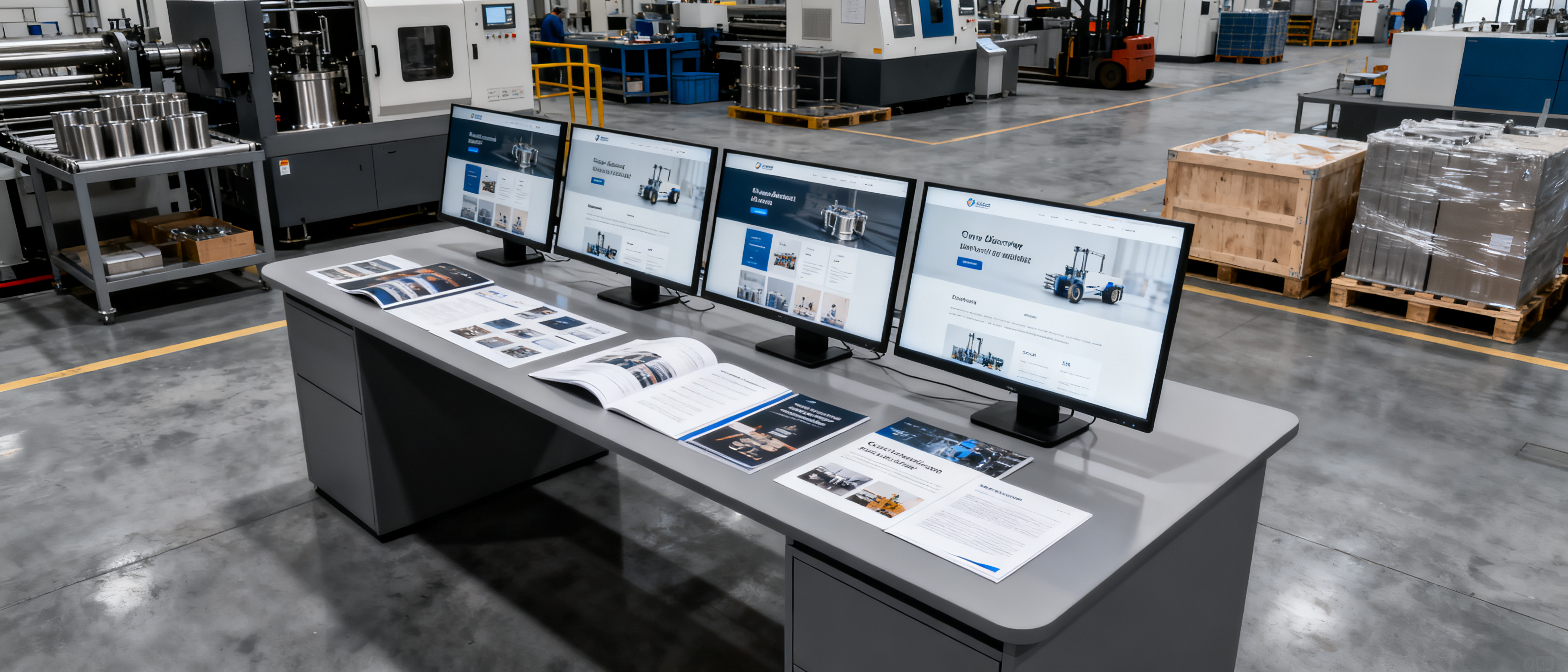
If you're looking for manufacturing website design examples you shouldnt miss, the ones that truly perform do more than look modern—they convert a buyer’s 10‑second scan on a directory like Europages into a credible reason to send an inquiry. Instead of just dumping a phone number and a faceless profile, the best manufacturing sites layer production proof, certifications, and original brand detail that no templated listing can match.
What a dedicated manufacturing website communicates that a Europages profile can’t (manufacturing website design examples you shouldnt miss)
A Europages listing can get a factory discovered, but it rarely builds the confidence a procurement team needs before they request a sample or a factory audit. A dedicated website fills that gap by communicating:
- Production authenticity. Real factory‑floor images, video clips of running assembly lines, and quality‑control station photos signal “we actually make things,” not just resell.
- Capability depth. An OEM/ODM page, machine list, or materials handling description answers the technical questions a buyer can’t get from a directory snippet.
- Trust markers. Scanned certifications, lab test reports, and badges from membership bodies give a buyer something concrete to forward to their manager.
- Buyer‑ready packaging. A downloadable company brochure, a plain‑English capability sheet, or a short video walkthrough turns a casual click into a forwarded asset inside the procurement department.
Europages (and similar B2B platforms) still has a strong role: it brings discovery traffic because buyers start their search there. But when a sourcing manager wants to verify whether you’re a genuine manufacturer or just a third‑party trader, they will look for an independent site. The manufacturing websites that work best don’t try to replace the platform—they act as the credible verification layer.
Essential pages that turn a Europages introduction into real inquiries
A factory site doesn’t need 30 pages to outperform a directory profile. Only a handful of high‑impact pages are necessary, and each one must answer the question a buyer is silently asking after clicking through from your Europages listing:
- About & Factory Facts. A short origin story, production region, square meters, and headcount with real photos—not stock—tells the buyer you’re a manufacturing facility, not a virtual office. Many Chinese export desks underestimate how quickly a buyer screens out “address‑only” company pages.
- Products (with filterable logic). A simple product grid, category tags, and search bar let a buyer narrow by material, industry, or process. Unlike a Europages gallery, you control the taxonomy so a hydraulic‑hose buyer doesn’t see pneumatic fittings.
- Quality & Certifications. A dedicated page or section with ISO/CE/FDA/UL certificates, in‑house testing equipment photos, and rejected‑batch analysis can shorten the audit cycle. Buying committees routinely check for this before signing an NDA.
- OEM/ODM Capabilities. Explain how you handle custom tooling, MOQ flexibility, and design‑file formats. This is the page that converts an “I found you on Europages” lead into a custom project discussion.
- Contact & Brochure Hub. Direct‑email form, WeChat/WhatsApp icons, a clickable map, and a downloadable PDF brochure. Make it effortless for a busy sourcing specialist to forward your details internally.
When these pages are present, a buyer scanning a supplier’s own domain gets a complete picture in under 10 seconds—something a marketplace profile can’t deliver because its fields are too shallow.
Design patterns that build buyer trust on manufacturing sites
Good design on a manufacturing website isn’t about flashy animations; it’s about reducing friction and amplifying credibility. The patterns that matter most for B2B trust include:
- Fast, stable pages. Over half of sourcing managers will leave a mobile‑loaded page that takes more than 3 seconds. Meeting the Core Web Vitals thresholds (LCP under 2.5 seconds, CLS under 0.1) signals professionalism. Google’s performance guidelines provide a practical benchmark for factory sites.
- Clean, scannable hierarchy. Use clear headings, short paragraphs, and bullet points so a buyer scanning on a phone can instantly pick out capacity, certifications, and product categories. Cluttered layouts that mimic a 2005 trade‑show booth hurt trust.
- Trust badges with context. Don’t just paste a certification logo; show the accompanying certificate number and expiry date so a buyer can verify. Similarly, featuring a well‑known brand collaboration (with permission) creates instant association.
- Real photography over renders. Grainy smartphone shots of an actual production line are often more convincing than polished stock images of a factory you don’t own. If you must stage a production area, use honest captions.
- Consistent contact signals. A visible “Request Quote” button, a phone number that works for international calls, and a direct‑mail address (not just a generic info@) tell the buyer you’re reachable without a middleman.
These patterns align with research on B2B purchasing behavior: buyers reward sites that make authenticity and key information instantly visible, especially when they are comparing 3‑5 suppliers in a single afternoon.
A managed frontage that eliminates design overhead
For a small OEM or export desk, the biggest barrier to owning such a site isn’t the idea—it’s the maintenance. Hiring a web designer, keeping plug‑ins updated, and dealing with hosting can eat time that’s better spent on production or customer communication. A managed B2B frontage solves this by delivering a pre‑structured, no‑maintenance English showcase that covers the exact trust‑building pages described above, without requiring a website team.
B2B Frontage, for example, takes the repeatable business knowledge of a manufacturer—company details, main solutions, certifications, and product lines—and assembles it into a thin, buyer‑ready site that mirrors those trust patterns. The plan stays opinionated: you don’t drag in thousands of heavy pages or fight a theme, because the frontage is built for fast scanning and easy forwarding. You can see a thin‑showcase example at B2B Frontage BESS demo, which follows the same page logic outlined above. With an own‑domain option, it functions as the verification layer that sits neatly alongside your Europages discovery profile—not a replacement, but the credibility layer that converts platform traffic into real inquiries.
FAQ
Do I still need a Europages profile if my manufacturing site has the same information?
Yes. B2B platforms like Europages, Made‑in‑China, or IndiaMART still bring buyer discovery traffic. Your own site serves a different role: it reinforces trust and makes you forward‑ready. When a procurement team member searches your company name after finding your listing, that independent domain is the proof point they share internally.
How much content does a manufacturing website really need to be credible?
Surprisingly little. Five core sections—About, Products, Quality, OEM/ODM capabilities, and Contact—are usually enough, provided each contains real photos and verifiable details. Length doesn’t matter as much as specificity; even a 4‑page+brochure setup can make a factory feel established if the facts are genuine and scannable.
What if I don’t have a designer or quality images of my factory?
Start with what you have. Smartphone photos of the shop floor, machines, and QC areas are often more persuasive than generic stock. A managed frontage service can also accept those basic assets and arrange them into a clean layout, minimizing the design burden. Over time, you can upgrade images as you document production runs.
Can a managed frontage replace a full‑scale manufacturer website later?
It can grow with you. A thin English showcase (like the examples mentioned) covers the trust‑building pages that buyers expect. If your company later needs a heavy CMS with ERP integration or multi‑site management, that’s a separate enterprise project—but for most export desks, a crisp, no‑maintenance frontage meets the immediate need without creating a future migration headache.
References & Further Reading
- Google Search Central – SEO Starter Guide (foundational visibility for manufacturer domains)
- web.dev – Fast load times (Core Web Vitals and the technical credibility that B2B buyers reward)
- Nielsen Norman Group – B2B Website Design (trust and content patterns for industrial buying decisions)
- B2B Frontage Blog (further articles on manufacturing frontage, thin‑showcase strategy, and bridging platforms with own‑domain trust)