2026-09-10
Manufacturing Website Design & Development: Agency, DIY, or Managed
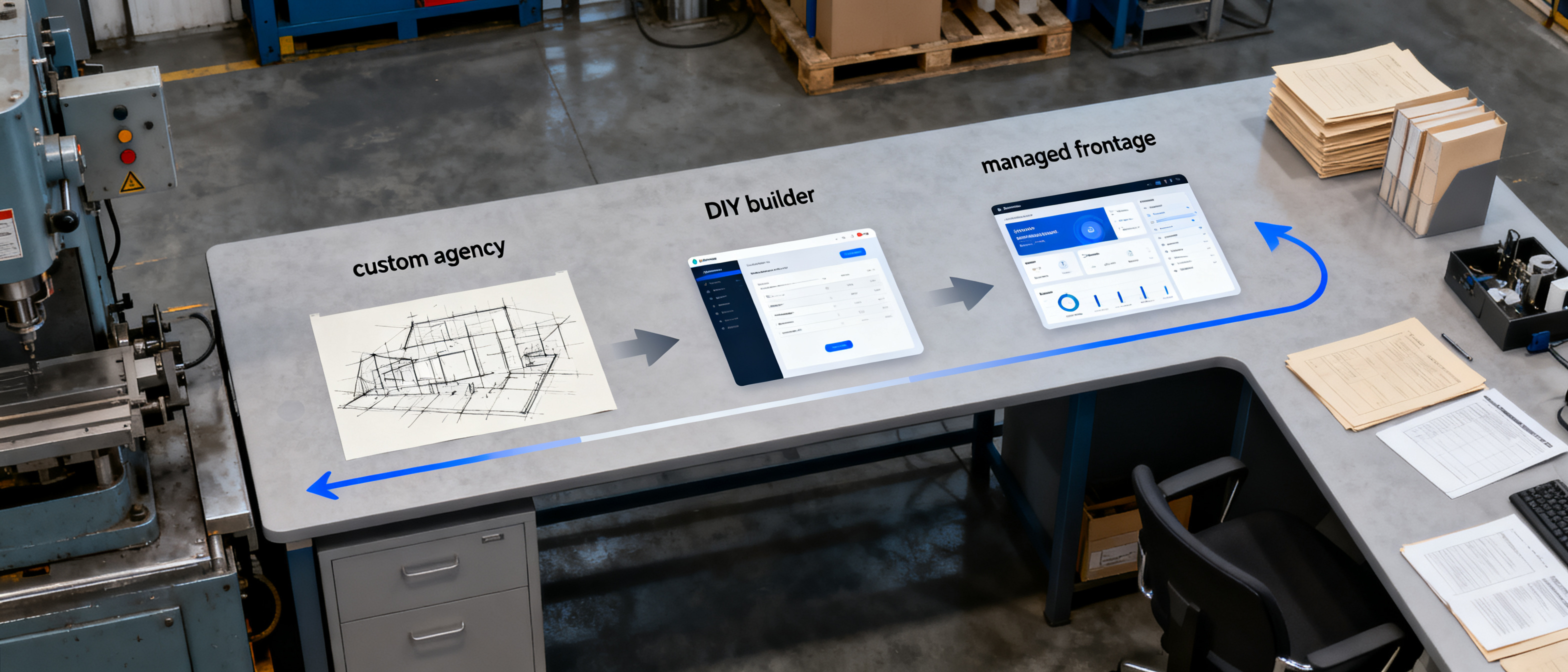
Choosing the right manufacturing website design & development path is less about picking the cheapest tool and more about matching the effort you’re prepared to invest long‑term. For a small factory or OEM export desk, the options fall into three clear buckets: a custom agency build, a do‑it‑yourself platform like WordPress or Wix, and a managed frontage where the website is essentially a finished product. Each delivers a different mix of cost, control, and ongoing maintenance, and the wrong choice often means paying for a website that nobody updates.
When a Custom Agency Website Makes Sense for Manufacturers
A custom agency build gives you full design freedom, a bespoke CMS, and the ability to integrate anything from ERP systems to multilingual product configurators. If you’re a mid‑size to large manufacturer with an in‑house marketing team, a complex product range, and a budget of $5,000–$50,000+, an agency can deliver exactly what you need. The process typically takes 8–20 weeks, and you’ll usually sign a maintenance contract ($100–$500/month) for updates, security patches, and hosting.
For most small export factories, however, that level of investment is overkill. A thin English frontage that shows who you are, what you make, and how to contact you rarely requires a custom CMS. You’re not running a multi‑step checkout or a gated dealer portal. If your primary goal is a trusted, independent domain presence that complements your Alibaba or Made‑in‑China listing, a six‑figure agency site adds overhead you’ll resent maintaining.
- When an agency fits: complex product configurators, ERP integration, multi‑country dealer portals, or a brand that demands pixel‑perfect design.
- When it doesn’t: a 5‑page export showcase, a company profile with contact details, or a site that gets updated once a year.
DIY Builders (WordPress, Wix) for Manufacturing Websites: Capabilities and Hidden Costs
DIY builders promise that anyone can handle manufacturing website design & development without code, but the advertised sticker price rarely accounts for the time and upkeep a professional‑looking site demands. Platforms like WordPress and Wix offer drag‑and‑drop editors, thousands of templates, and plugins for SEO, forms, and analytics. A factory owner can technically launch a functional site for $0–$100 in hosting and theme costs.
The hidden costs are the real story. You’ll spend 20–50 hours on initial setup: choosing a template, customising it to avoid looking like a thousand other businesses, writing copy, optimising images, and testing mobile responsiveness. Then you’ll need 2–5 hours every month to update plugins, renew security certificates, fix broken layouts after a platform update, and keep content fresh. If you skip maintenance, the site quickly becomes slow, vulnerable, or outdated—the opposite of the trust signal you want to send a buyer who scans supplier sites in 10 seconds.
- Time cost: 20–50 hours upfront, plus 2–5 hours/month ongoing.
- Security & updates: WordPress sites require constant plugin patches; even Wix handles platform updates but you still need to review your content.
- Design risk: A blank canvas means you make every decision. Without design experience, a DIY site can look amateurish, hurting credibility.
- Hosting & domain: separate costs that add $10–$40/month, plus SSL configuration.
For a small manufacturer who just needs a credible online business card, a DIY builder is often overkill. You’re hiring yourself as a part‑time webmaster, and the gap between “I can build it” and “I will maintain it” is where factory websites collect dust.
The Managed Frontage Alternative: A Website Without the Maintenance
A managed frontage flips the model: you provide the business facts, and the platform delivers a finished, hosted website that stays updated with no ongoing maintenance on your part. B2B Frontage is one example of this approach—it turns your company details, solutions, and optional certifications into a professional English B2B showcase, a digital card, and a brochure, all from a single truth set. Its Auto $59/year plan is deliberately opinionated, meaning you don’t choose fonts or layouts; you get a clean, fast, mobile‑friendly frontage that a buyer can scan in seconds.
The platform handles hosting, security, updates, and even regenerates the site when you change your business details in the future. There is no dashboard to log into weekly, no plugin to update, and no design decisions to second‑guess. You fill in what you make and how to reach you, and the system assembles the pages. Because the scope is fixed—a thin, independent frontage—the result is always performant and consistent, without the bloat that creeps into a DIY site over time.
This is not a Wix clone. It’s a managed service that removes the IT burden. For a factory that needs a credible own‑domain presence to strengthen trust alongside marketplace listings, a managed frontage eliminates the trade‑off between “I need a website” and “I don’t have a website team.” If you later require a full product catalogue or custom design, larger CMS plans are available by quote, but the $59 plan covers the 80% case: a simple, independent, maintenance‑free export frontage.
How to Decide: A Comparison Table for Small Manufacturers
The table below compares the three paths on the dimensions that matter most to a small OEM or export desk. Use it to weigh the real cost of maintenance against your appetite for design control.
| Path | Initial Cost | Time to Launch | Ongoing Maintenance | Best For | Hidden Costs |
|---|---|---|---|---|---|
| Custom Agency | $5,000–$50,000+ | 8–20 weeks | $100–$500/month (agency contract) | Large manufacturers with complex needs, in‑house marketing teams | Scope creep, vendor lock‑in, long turnaround for updates |
| DIY Builder (WordPress, Wix) | $0–$100 (hosting/theme) | 20–50 hours of owner time | 2–5 hours/month (owner time) + $10–$40/month hosting | Hands‑on owners with design skills and time to maintain | Time drain, security risks, amateur design if not skilled |
| Managed Frontage (B2B Frontage) | $59/year (Auto plan) | ~10 minutes after submitting business info | None (platform handles all updates) | Small factories, export desks needing a thin, credible English presence | Limited design freedom (you can’t change the layout) |
Note: The managed frontage row references B2B Frontage as a concrete example; other managed services exist, but the principle is the same—you pay for a finished product, not a tool you have to operate.
FAQ
Can I use my own domain name with a managed frontage like B2B Frontage?
Yes. B2B Frontage supports custom domains, and the platform automatically provisions SSL certificates so your frontage loads securely over HTTPS. This keeps your brand independent of any marketplace or subdomain.
What if I need a product catalog or multiple languages?
The $59/year Auto plan provides a single‑language showcase of your company, solutions, and basic credentials. It is intentionally thin—a digital business frontage, not a full e‑commerce catalogue. If you need a detailed product catalogue or multilingual pages, you can either move to a custom CMS plan (quoted by B2B Frontage) or engage a custom agency. The managed frontage is optimised for the 80% case: a simple, credible presence that doesn’t require a maintenance crew.
Is a managed frontage enough to generate buyer inquiries?
A managed frontage provides the trust layer buyers expect after they find you on a marketplace or through a Google search. It won’t guarantee rankings or inquiries, but it offers a fast, professional domain presence that signals legitimacy. Without any independent website, many procurement professionals will simply skip your company. The frontage works alongside your existing sales channels—it’s a complement, not a replacement.
References & Further Reading
- B2B Frontage Blog – articles on manufacturing websites, buyer trust, and export frontage strategies.
- Google’s guide to small business websites – why a simple, fast website matters for discoverability and trust.
- Core Web Vitals – Google’s metrics for site speed and user experience; a managed frontage is built to pass these by default.
- Static Generation in Next.js – the technical foundation that enables fast, pre‑built pages with zero maintenance overhead.