2026-09-12
Managed Website Plan vs DIY Ownership: Auto $59 Plan & Limits
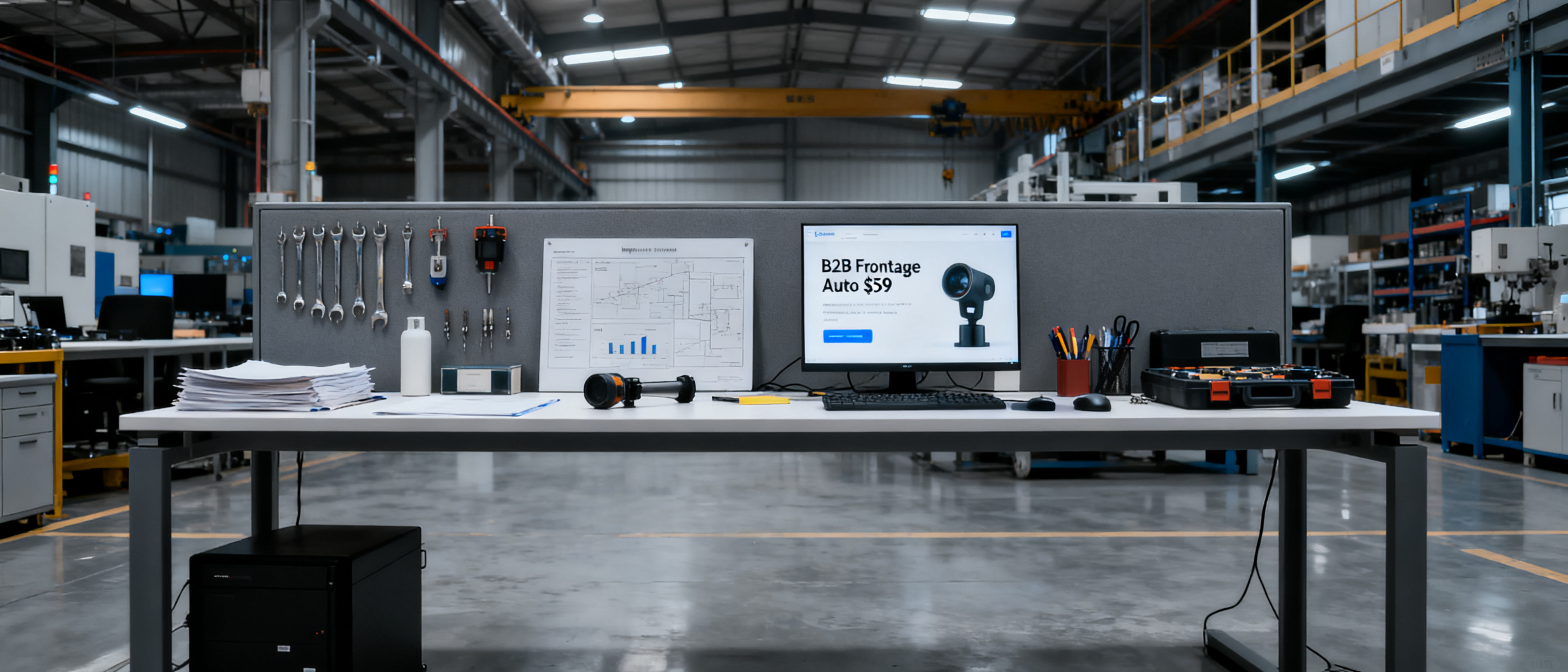
When an export desk or small manufacturer weighs a managed website plan vs diy ownership, the decision isn’t about which tool is cheaper on the sticker — it’s about who carries the ongoing technical weight. With an opinionated managed plan like B2B Frontage’s Auto $59 showcase, you’re paying to remove website maintenance, design guesswork, and the need for a dedicated web person. Full DIY ownership on a builder such as Wix or WordPress gives you unlimited creative freedom, but every security patch, mobile-breakpoint fix, and performance tweak lands back on your desk. This comparison explains exactly what you own under each model, and where the limits sit for a factory that needs a credible English presence — without a website team.
What a Managed Website Plan vs DIY Ownership Really Means for an Export Desk
When you buy into a managed website plan vs diy ownership, “ownership” shifts from technical infrastructure to the business knowledge you supply. In a managed setup, the platform owns the hosting environment, the responsive design logic, SSL renewal, and the code that keeps the site fast and secure. What you own — and what B2B buyers care about — are the factory facts: your company profile, product capabilities, certifications, and contact channels. A DIY site, by contrast, makes you the owner of the entire stack: hosting account, theme files, plugin updates, image compression, and the final look on every screen size.
For an OEM factory or regional manufacturer, this distinction matters. An export manager can update a set of product details in a managed dashboard once and trust that the public site, the digital business card, and a downloadable brochure all reflect the change — no designer, no staging environment, no manual sync. Under DIY, that same change might mean editing a page builder block, re-optimising images, and checking mobile views for each affected page.
B2B Frontage’s approach is deliberately narrow: you don’t choose a template or tweak a theme. The platform makes those decisions so that your “ownership” is limited to the content that convinces a buyer to inquire. That trade-off — fewer decisions, far less maintenance — is the heart of a managed website plan vs diy ownership for a lean export desk.
The Auto $59 Managed Plan — Included, Hosted, and Maintained for You
The Auto $59 annual plan from B2B Frontage is a thin, English B2B frontage designed to sit alongside marketplace profiles on Alibaba, Made-in-China, IndiaMART, or Thomasnet. You provide your company facts once; the platform handles everything technical. There is no server to configure, no SSL to renew manually, and no update queue. The plan includes:
- A clean, mobile-ready B2B showcase with your company name, solutions overview, and contact information
- Managed hosting, SSL certificate, and automatic performance optimisation — passed out of the box
- One set of factory knowledge (products, certifications, production lines) that generates a site, a shareable digital business card, and a single-page brochure — no duplicate data entry
- A dedicated short link (your-name.getb2bsite.com) ready to paste into email signatures or marketplace profiles
- Custom domain support — point your own domain at the frontage without configuring DNS records; the platform guides the process and then manages it
- Optional Business Details after go-live: add machine lists, cert images, or warehouse facts at any time from the same managed dashboard
You can see exactly how this managed frontage looks by visiting the standard manufacturing demo or the CNC supplier example. Both are live, maintained by the platform, and represent what a $59/yr plan delivers: a trustworthy destination, not a design project.
Because the plan is opinionated, the platform enforces a set of rules that define what gets displayed and how. Those guardrails are what make the managed model possible at this price — you never pay extra for a “premium template” or a mobile-responsive plugin.
Where DIY Ownership Still Applies — What Stays Yours to Manage
A managed plan does not eliminate all ownership responsibilities; it simply separates the website tech from the business content. Under the Auto $59 plan, you remain directly responsible for:
- Domain ownership. If you use a custom domain, you buy and renew it through a registrar. B2B Frontage helps you connect it, but the domain remains your asset.
- Accuracy of your facts. When you discover a new certification or retire a machine, you update the Business Details inside the platform. The frontage instantly regenerates — but the truth-check is yours.
- Inquiry handling. The site displays your email, phone, and optionally WhatsApp. It doesn’t route leads or store messages; you reply as you normally would.
- Digital card and brochure distribution. The platform creates these assets, but you decide where to share them — email signatures, WhatsApp chats, trade-fair QR codes.
- Beyond-thin content growth. If you later need a multi‑page catalogue with 200 SKUs or a news blog, that falls outside the $59 managed scope. B2B Frontage offers a larger CMS by quote, but you wouldn’t build those pages inside a DIY builder and try to merge them — you’d move to a managed custom plan or accept the limits.
This split is why the “managed website plan vs diy ownership” question often surprises factories that try a DIY builder first: they realise they own far more than they expected, including uptime monitoring and plugin conflicts. With the Auto $59 plan, the platform swallows the recurring tech work; you only own the business layer that already lives in your head.
Managed vs DIY: When Avoiding a Website Team Pays Off
For a typical export manager, a DIY builder quickly becomes a part-time job. Hosting costs may be low, but the hidden price is the time spent inside a page builder, chasing a layout that still doesn’t look right on a buyer’s phone. The table below compares the responsibility split under an opinionated managed plan vs DIY ownership, using B2B Frontage Auto $59 as the managed reference.
| Responsibility | Managed (B2B Frontage Auto $59) | DIY Ownership (Wix / WordPress / own‑hosted) |
|---|---|---|
| Hosting, security & SSL | Fully managed, included in $59/yr | You arrange hosting, renew SSL, monitor uptime |
| Design & layout | Opinionated frontage, no template choices | You design or customise a theme; responsibility for mobile adaptation |
| Content updates | Update facts once; site/card/brochure regenerate automatically | Manually edit each representation; risk of inconsistencies |
| Performance (Core Web Vitals) | Platform optimises images, caching, layout stability | You test and fix speed issues, often with plugins or developer help |
| Ongoing maintenance | None — platform applies updates, fixes, and improvements | You manage plugin/core updates, test for breakage |
| Typical annual cost (excluding domain) | $59 | $100–250+ (hosting + premium theme + plugins) + your time |
Google’s Core Web Vitals documentation makes it clear that loading speed and layout stability affect how visitors perceive a business. A DIY site can certainly meet those thresholds, but someone has to measure, tweak, and re‑test. With B2B Frontage’s managed plan, that work is done before your frontage ever goes live — and it stays in shape without you opening a dashboard. When a sourcing buyer scans your page for 10 seconds, they don’t notice the server configuration; they notice whether the site feels professional or broken. A managed plan removes the most common failure points without requiring you to learn web development.
For an export desk that already handles quotes, production, and logistics, the ability to avoid hiring a web person — or avoiding becoming one themselves — is the financial and mental payoff. The Auto $59 plan deliberately limits what you can change, and that limit is the feature: fewer decisions, no maintenance queues, and a B2B frontage that stays aligned with your latest factory facts.
FAQ
What is the biggest difference between a managed website plan and DIY when you only need a basic factory presence?
The biggest difference is who carries the technical burden. With a managed plan like B2B Frontage Auto $59, hosting, SSL, design, and performance are bundled and maintained for you — you supply the business facts and forget about the rest. A DIY builder or self-hosted WordPress site gives you more layout freedom but puts you in charge of uptime, updates, image optimisation, and mobile testing. For a lean export team, that small design freedom often costs more in time than it returns in buyer trust.
Can I use my own domain name with the Auto $59 plan, and who owns the domain?
Yes. The Auto $59 plan fully supports custom domains. You purchase and renew the domain through any registrar (you own it indefinitely), and B2B Frontage’s setup process guides you through connecting it. Once connected, the platform manages the technical side — DNS configuration, SSL provisioning, and renewal — so your custom domain points to a trusted frontage without ongoing effort from you.
What happens when I need to add a new certification or product line to my managed site?
You log into your B2B Frontage dashboard, update the Business Details section with the new information (for example, uploading a cert image or adding a product category), and save. The platform automatically regenerates your website, digital business card, and brochure. There are no theme settings to adjust, no layout to rebuild. The same change appears consistently across all your outward-facing assets, usually within minutes.
Does a managed plan like Auto $59 help me rank higher on Google?
No managed plan can guarantee search rankings, and B2B Frontage makes no such promise. What the managed plan does is provide a technically sound foundation that meets the speed, mobile‑friendliness, and structured content expectations that Google outlines in its SEO fundamentals. The frontage loads quickly, uses clean semantic HTML, and supports secure HTTPS — all factors that indirectly support discoverability. Actual traffic still depends on how you promote the site through marketplace profiles, email outreach, and off‑page signals, which remain entirely in your hands.
References & Further Reading
- B2B Frontage — Standard export factory demo (managed Auto $59 example)
- CNC supplier managed frontage demo
- Platform rules that define the Auto $59 managed scope
- B2B Frontage blog — more comparisons and export‑desk tips
- Core Web Vitals documentation (web.dev) — why performance matters for business sites
- Google Search Central — SEO fundamentals (technical prerequisites for modern sites)