2026-11-18
Industrial Website Development in Tunisia: Scope Beats Options
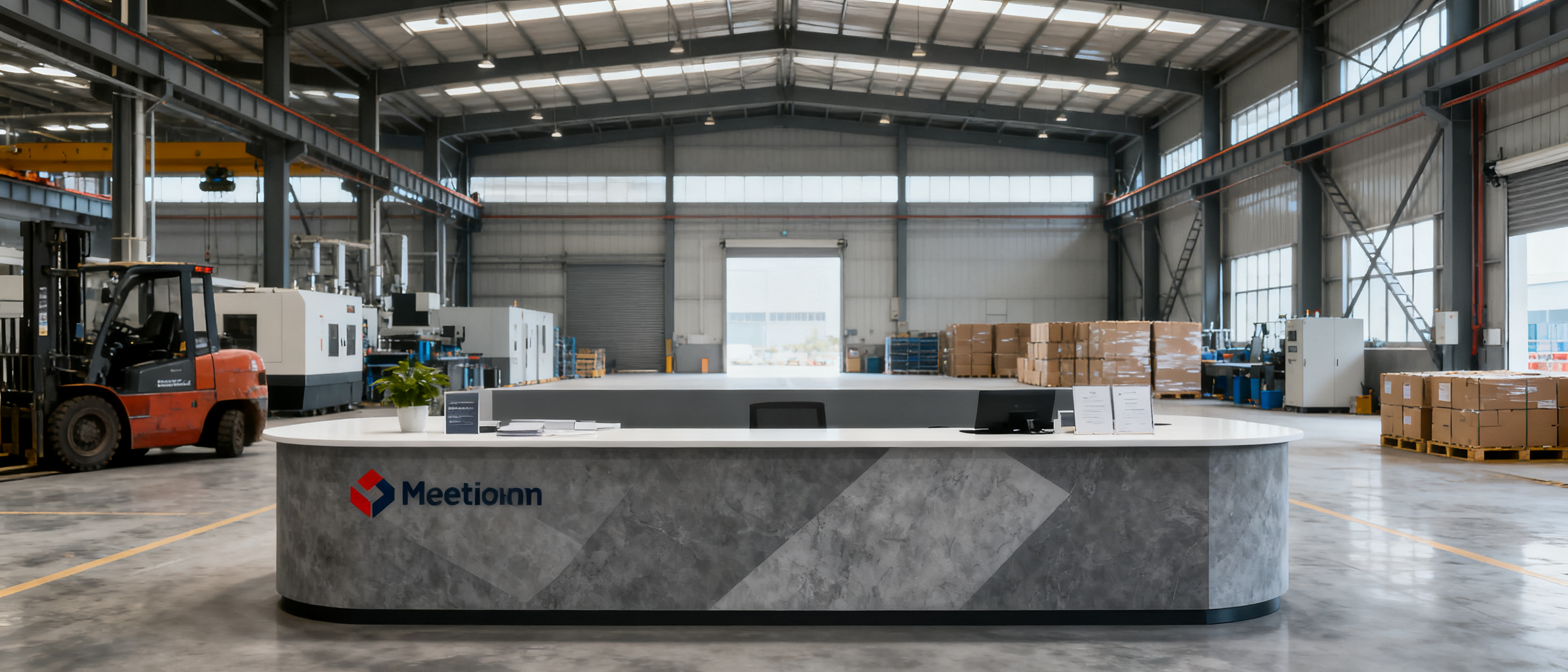
Industrial website development in Tunisia succeeds when you lock in a tight, opinionated scope — not when you hand a manufacturer a blank dashboard and 200 theme options. For export-focused OEMs and small industrial suppliers, a thin set of pages that answer a buyer’s first trust questions will always outperform a bloated corporate site that takes months to launch.
What Shapes Industrial Website Development in Tunisia?
Industrial website development in Tunisia sits at the intersection of three languages, two continents, and one very impatient buyer profile. Most local manufacturers serve European subcontracting chains — automotive components, textile intermediates, mechatronic parts, packaging — where procurement managers scan supplier sites in under 15 seconds. They check for factory photos, ISO or CE logos, a clear capabilities list, and a direct contact channel. If any of those are missing, trust collapses.
Language adds another layer. A Tunisian industrial site typically needs at least French and English, sometimes Arabic. English is the common denominator for non-francophone buyers from Germany, the Nordics, or Asia. Yet many factory sites still launch in French-only, shutting out English-language sourcing teams. Google’s international targeting guidelines recommend using separate URLs or hreflang tags for each language, but a pragmatic shortcut is a single well-structured English page with clear bilingual fallbacks — far cheaper for a small manufacturer.
Mobile speed matters here, too. Tunisia’s average mobile connection isn’t blazing, and 4G latency can hurt Core Web Vitals. Google’s web.dev performance documentation shows that a 0.1-second improvement in Largest Contentful Paint can lift conversion rates. Industrial sites that strip out heavy sliders and video backgrounds pass the buyer’s “does it load?” test without a developer.
The Blank-Page Problem: Why Too Many Options Stall OEMs
Most website builders promise unlimited design freedom, but a factory owner doesn’t need freedom — they need a factual frontage. The blank-page problem hits when an export manager opens a drag-and-drop tool, sees a grid of 120 templates, and faces a cascade of decisions: color palette, hero image, font pair, button style, animation. Weeks pass while the site remains a staging link shared only inside the office.
This is why opinionated scope beats options every time. An industrial supplier trying to launch an English showcase doesn’t have the design vocabulary to choose among 40 layouts. They have a set of facts: company name, products, certifications, machinery list, contact. When the website tool does not commit to a structure, the factory defaults to “let me ask my nephew who studies IT” — and the project drifts. Research on decision paralysis from the behavioral economics field (Iyengar & Lepper’s jam experiment) famously showed that fewer options increase action. The same logic applies to industrial website development in Tunisia: remove unnecessary choices, and a site goes live in days instead of months.
Opinionated Scope: 5 Pages That Close a Buyer’s Trust Gap
A no-maintenance industrial frontage needs exactly five pages — nothing more. Each page solves one specific buying doubt:
- Home (Trust Anchor): One clear hero sentence stating what the factory makes, for whom, and one factory exterior photo. No rotating sliders, no mission statements about “excellence.”
- Products / Capabilities: 6–12 representative product lines with real images and minimal specs. A concise table of processes (e.g., CNC turning, injection molding, SMT assembly) works better than a PDF catalog.
- Quality / Certifications: Scanned ISO, CE, or customer audit approvals. Even a phone photo of a certificate on the wall adds credibility when sourcing managers are comparing three candidate suppliers.
- About / Factory Facts: Year founded, floor area, export markets served, key equipment list. Buyers want to verify the supplier isn’t a trading company with a rented desk.
- Contact / Inquiry: A direct email, WhatsApp link, and a short inquiry form. No long dropdowns — just name, message, and a file upload for drawings.
This five-page structure isn’t arbitrary. It mirrors how procurement professionals evaluate new suppliers on B2B platforms: they scan the company profile, jump to products, verify certifications, check contact details, then send an inquiry. An industrial site that simply mirrors that scan path makes the buyer’s job faster — and that speed increases the chance of a first quote request.
Typical Cost and Timeline for Industrial Sites in Tunisia
Costs vary wildly depending on whether you hire a local agency, use a freelancer, or adopt a managed approach. Below is a realistic breakdown for an English industrial showcase site in Tunisia (excluding domain and hosting, which add roughly $20–40 per year).
| Approach | Typical Cost (Upfront) | Timeline | Maintenance Burden |
|---|---|---|---|
| Local Tunisian web agency | $800 – $2,500 | 4–10 weeks | High (ongoing contract required for updates) |
| Freelance designer (Upwork/Malt) | $400 – $1,200 | 2–6 weeks | Medium (you chase them for changes) |
| DIY page builder (Wix/Squarespace) | $0 – $300 (plus time) | 2–6 months (if not stuck) | High (factory staff must learn the tool) |
| Managed industrial frontage service | $59 – $299 per year | 2–5 days (once facts are ready) | None (platform handles updates) |
The hidden cost isn’t the launch — it’s the ongoing technical debt. A WordPress site needs plugin updates, security patches, and occasional rebuilds. A self-built Wix site still requires someone internally who understands the builder. In many Tunisian small manufacturers, the “web person” is the same engineer managing production schedules. When website maintenance competes with a late-night shipment, the site goes stale in six months. Managed approaches that swallow technical work remove that recurring friction.
FAQ
Do I need a .tn domain for my industrial site in Tunisia?
Only if your buyer base expects a local presence. For export-focused manufacturers serving European or Asian buyers, a .com domain often signals a more international outlook. A .tn domain helps with local SEO if you also supply the North African market, but it does not directly improve trust with a German procurement agent. Many Tunisian suppliers use .com and add a “Made in Tunisia” badge on the home page instead.
Can a five-page website really compete with a full Alibaba or Europages profile?
They serve different roles. A marketplace profile puts you into a searchable buyer directory; an own-domain industrial site gives a buyer who already found you a dedicated destination to verify you before sending an inquiry. Buyers often cross-check: they discover a supplier on a platform, then Google the company name. If no official website appears, suspicion rises. A slim, factual site prevents that loss of trust without needing to match the platform’s feature set.
What’s the fastest way to launch an English industrial website without hiring a web team?
The fastest route is to prepare your business facts in a structured document (company summary, product list, certification images) and hand them to a service that pre-builds an opinionated manufacturer frontage. That eliminates all design decisions and CMS training. Some managed services can turn around a live site in 2–3 business days once the content is ready — far quicker than any agency onboarding process.
References & Further Reading
- Google Search Central – International and multilingual sites
- Web.dev – Performance metrics and Core Web Vitals
- B2B Frontage blog – Manufacturer website advice
- Tunisie Industrie Portal – Industrial information
- Iyengar, S. & Lepper, M. (2000). When Choice is Demotivating. Journal of Personality and Social Psychology.