2026-09-12
Official English Presence for Export Desks: No Website Team Needed
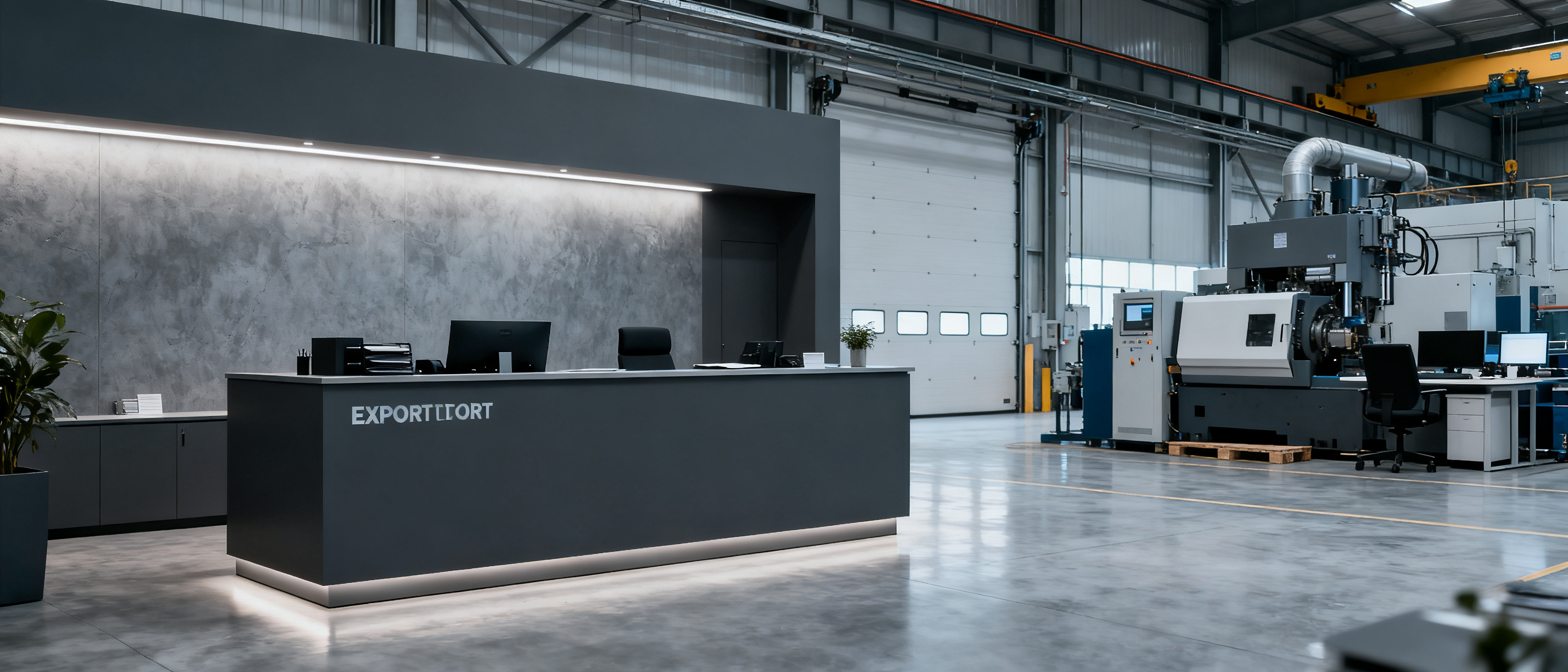
Establishing an export desk official english presence without a website team is not only achievable—it’s turning into a standard play for lean manufacturers and SME export desks who want to complement their directory profiles with a verification asset buyers actually trust. Most factory export teams still believe a credible English website requires a developer on payroll, ongoing security patches, and content overhauls they cannot staff. The reality is different: a thin, opinionated, and maintenance‑free website strips away the IT burden while giving procurement managers exactly the signals they scan for in 10 seconds or less—company legitimacy, product focus, certifications, and a clear way to inquire.
Why Your Own English Site (an export desk official english presence without a website team) Builds More Trust Than a Directory Profile
Marketplace profiles on Made‑in‑China, Global Sources, or IndiaMART deliver discovery; they rarely deliver closing confidence. B2B buyers consistently check a supplier’s own domain as a trust benchmark, even when the initial contact happens inside a platform. A study by McKinsey on B2B decision‑making noted that over 70% of buyers conduct independent online research before ever speaking to a supplier, and a dedicated website acts as a stable, verifiable anchor separate from the platform profile they already saw.
What makes an owned site more reassuring:
- Permanence. Directories list thousands of look‑alike factories; a branded domain signals a real operating business with something to lose.
- Control of narrative. You choose which certifications, production lines, and export markets to highlight, without template constraints.
- Zero‑competing‑ads. Your own page puts the attention on your company, not on a row of paid competitor listings immediately above your profile.
- Email credibility. Quoting from a @company.com address and linking to a matching domain builds B2B trust faster than using a Gmail or platform messenger alone.
Importantly, this doesn’t demand a complex site. Many factory directors are surprised to learn that a fast, single‑language showcase with under six core pages can outperform an outdated 50‑page WordPress build that hasn’t been touched in three years. Google’s own guidance on helpful content rewards sites that serve a clear, honest purpose, not sites bloated with thin filler pages (Google Search Central). When a buyer lands on a clean, factual English page after clicking from an Alibaba RFQ, the psychological effect is a jump in perceived professionalism—without a web team being involved.
The Hidden Cost of Website Maintenance for Small Export Teams
When export managers argue they are “too busy for a website,” what they usually mean is they’ve experienced—or anticipate—the maintenance treadmill. A conventional site comes with an invisible taxi meter that keeps running:
- Security patches. CMS platforms like WordPress require weekly updates to plugins and core files. One missed update and the site can be defaced, turning a trust tool into a liability.
- Hosting and SSL renewal. Even managed hosting needs someone to keep a credit card current, respond to expiry notices, and handle downtime at 2 a.m. local time.
- Content rot. Staff photos change, ISO certificates expire, a new warehouse is added. Without an easy update path, the site drifts further from reality each quarter, which damages trust as much as having no site at all.
- Speed erosion. A site launched at a reasonable 2.2 seconds can degrade to 6+ seconds once third‑party scripts, uncompressed images, and leftover plugins accumulate. Core Web Vitals research from web.dev shows a 32% increase in bounce probability when a page load moves from 1 to 3 seconds (web.dev Vitals). For procurement scanners who give a site 10 seconds of attention, a slow load equals a lost RFQ.
For a small export desk—perhaps a manager plus one documentation assistant—this maintenance represents a hidden weekly cost of 2–4 hours spread across interruptions, hosting bills, and freelance developer calls. Over a year, that easily eclipses the entire annual cost of a maintenance‑free solution that auto‑handles security certificates, hosting, and content refreshes from a single company profile.
What a Lean Export Website Needs to Win RFQs
Buyers scanning a new supplier’s site follow a predictable pattern: they look for who you are, what you make, proof you can deliver, and how to reach you. A lean export site should answer those four questions in under 15 seconds of scanning. That means every pixel and paragraph must carry measurable load for an RFQ decision.
A minimal yet complete structure often includes:
- Company identity + capabilities. One sharp headline (“Steel Castings OEM Since 2003”) with a three‑sentence summary of annual capacity, main export markets, and differentiators.
- Product or solution overview. Not an 800‑item catalog, but 2–4 representative product groups with clear photos, materials, and size ranges. Link deeper if needed, but keep the first view tight.
- Certifications & production lines. JPEGs or simple tables of ISO statements, factory audit reports, and key equipment photos. Buyers instantly snap to these; treat them as trust signals, not afterthoughts.
- Contact & inquiry path. A dedicated page with a short RFQ form, a direct email, and optionally WhatsApp. Avoid multi‑step contact forms that reduce submissions.
- Optional: export team or project highlights. One recent shipment photo with country destination can speak louder than a “we are reliable” paragraph.
The critical design rule: no sliders, no auto‑play videos, and no generic stock photography. An actual factory floor photo shot on a phone often converts better than a polished library image, precisely because it signals authenticity to procurement professionals who have seen every template. Performance‑wise, a statically generated page that loads under 1.5 seconds while passing Google’s Core Web Vitals creates the friction‑free experience that busy buyers reward with inquiries.
How to Launch and Maintain a Site Without a Web Person
Export desks typically fall into a trap: they hire a freelance developer, go through weeks of back‑and‑forth for design, launch a decent site, and then find the developer has moved on when the SSL certificate expires six months later. Breaking free of the web‑person dependency means choosing an operating model where ongoing technical work is absorbed into the platform, not pushed onto the owner.
Three practical paths exist today:
- Minimal static site + managed update service. Hire a developer once to build a fast HTML‑only site (often using a static site generator like Hugo or Next.js). Then pay a modest monthly retainer for a human to edit text and swap images when needed. The risk remains: that person can leave.
- B2B‑oriented managed site service. Several providers now target manufacturers specifically with a “fill a profile, get a site” model. You supply company facts, solution summaries, and certification images once; the platform assembles and hosts the English showcase, handles SSL, and updates automatically when you change a product detail. This approach means the export manager manages knowledge—not CSS. The annual cost typically ranges between $50 and $300, far below an in‑house or agency retainer.
- Marketplace‑provided subdomain. Platforms like Alibaba offer simple mini‑sites, but they rarely let you use your own domain name and can restrict design. This option works as a stopgap when a profitable own‑domain presence is still being built.
The mindset shift: stop viewing the website as a technology project that needs a specialist, and start treating it as a single source of company knowledge that can be published once and displayed across the web—your own domain, a shareable digital card, a brochure PDF, a short link in email signatures—without touching HTML. When a platform handles layout, performance, and security, you get the ongoing benefit of an official English presence without having a “website person” on the organizational chart.
FAQ
Do I need to buy a domain name myself, or can I use a free subdomain?
You do not need your own domain on day one, but using one (for example, yourcompany.com) signals independence from any single directory and gives buyers confidence to reply to RFQs. Domains cost roughly $10–$15 per year. Most managed site services let you bring your own domain, sometimes at no extra charge. A generic subdomain (yourname.provider.com) works during a trial phase, but for long‑term export trust, your own domain is a small investment.
What is the minimum number of pages a B2B export website really needs?
You can credibly operate with four to six pages: Home, About/Company, Products/Solutions, Contact, and optionally Certifications or a single Portfolio page. Adding more pages without real buyer value (for example, a long‑winded “History” timeline or a blog you never update) does not improve RFQ conversion and can slow down the site. Procurement visitors scan fast; give them exactly what they need and a clear inquiry path on every page.
How do I handle updates when our ISO certificate renews or a new machine arrives?
If you’re using a managed B2B site service, you typically log in once, update that one fact in your company profile, and the change propagates to the website automatically. No HTML editing, no FTP, no developer. With a static site maintained by a freelancer, you’d email them the new file and wait for them to push the update. Choosing a platform that treats business facts as a single source of truth eliminates the update lag entirely.
Can a small export manufacturer rank on Google without an SEO expert?
Yes, for a highly specific search (for example, “CNC brass turned parts Taiwan factory”), a lean, well‑structured English site with accurate meta titles, clear headings, and consistent NAP (name, address, phone) information can begin ranking in a few months—without an SEO consultant. Google’s algorithm specifically values original, helpful content over sites built purely to manipulate search. Pair a factual site with a handful of genuine buyer inquiries and Google sees the trust signals. The key is starting with one precise region‑product combination rather than trying to rank for “metal parts supplier” globally.
What if I already have an Alibaba Gold Supplier profile—why add another website?
Alibaba and similar marketplaces bring buyers to your door; an own‑domain website helps those buyers decide to knock. It also serves as a permanent, platform‑neutral presence that works across your email footer, LinkedIn outreach, and any trade show brochure. When a buyer Googles your company name after seeing you on a platform, an official website gives you control over that first search result, rather than leaving it to directory listings or competitor ads.